Greenhouse or fence foundations are usually planned as a quick job. Something you expect to finish in a day. Once you start, it becomes clear that most of the time is not spent pouring concrete, but moving between tasks.
When concrete is mixed separately and carried to the site, the process slows down and takes longer than expected.
When mixing concrete manually, the work happens in stages. You prepare the mix, carry it, pour it, then go back to mix again.
After an hour, it becomes obvious that little has been completed, even though a lot of effort has been used. The rest of the day is spent repeating the same cycle.
Greenhouse or fence foundations do not require large amounts of concrete. The real difference comes from how the concrete is prepared and used.
When everything is done in one place, work moves consistently. When you need to carry materials and repeat the same steps, the process slows down and becomes physically demanding.
The process changes when concrete is mixed directly where the work is done.
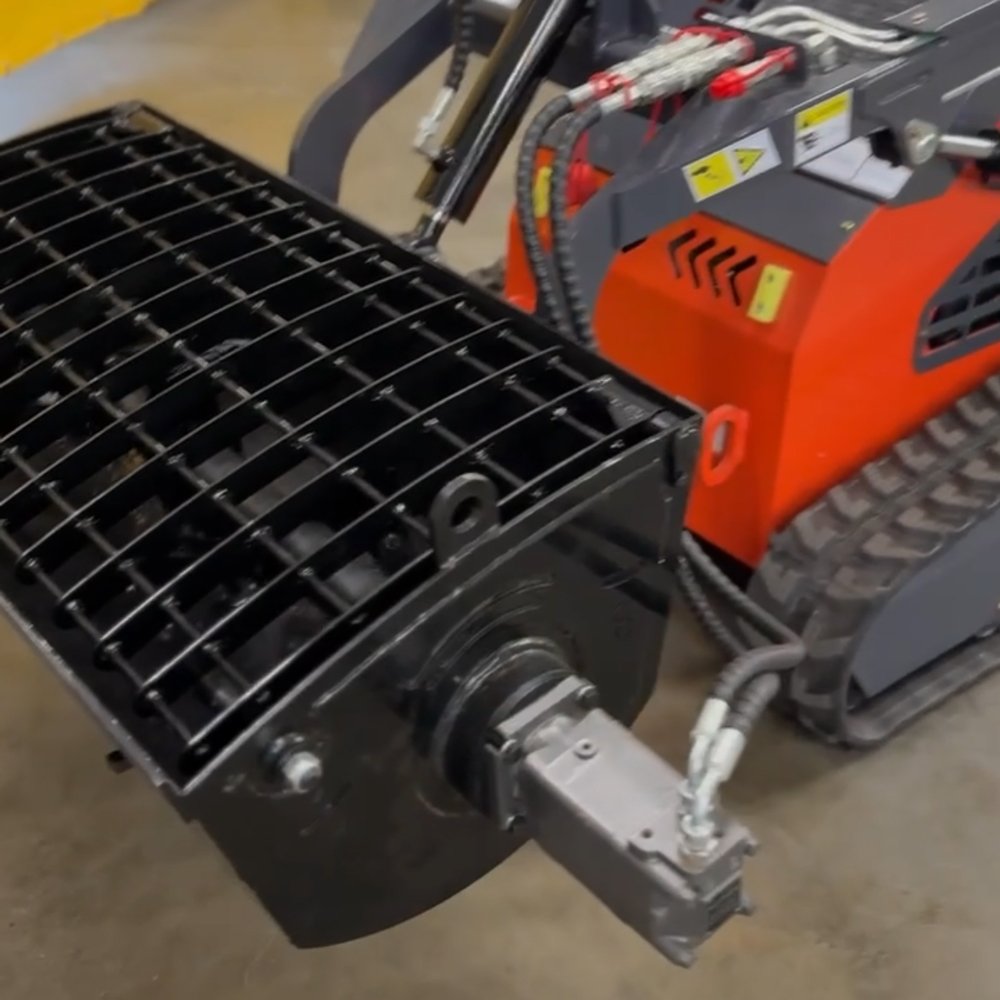
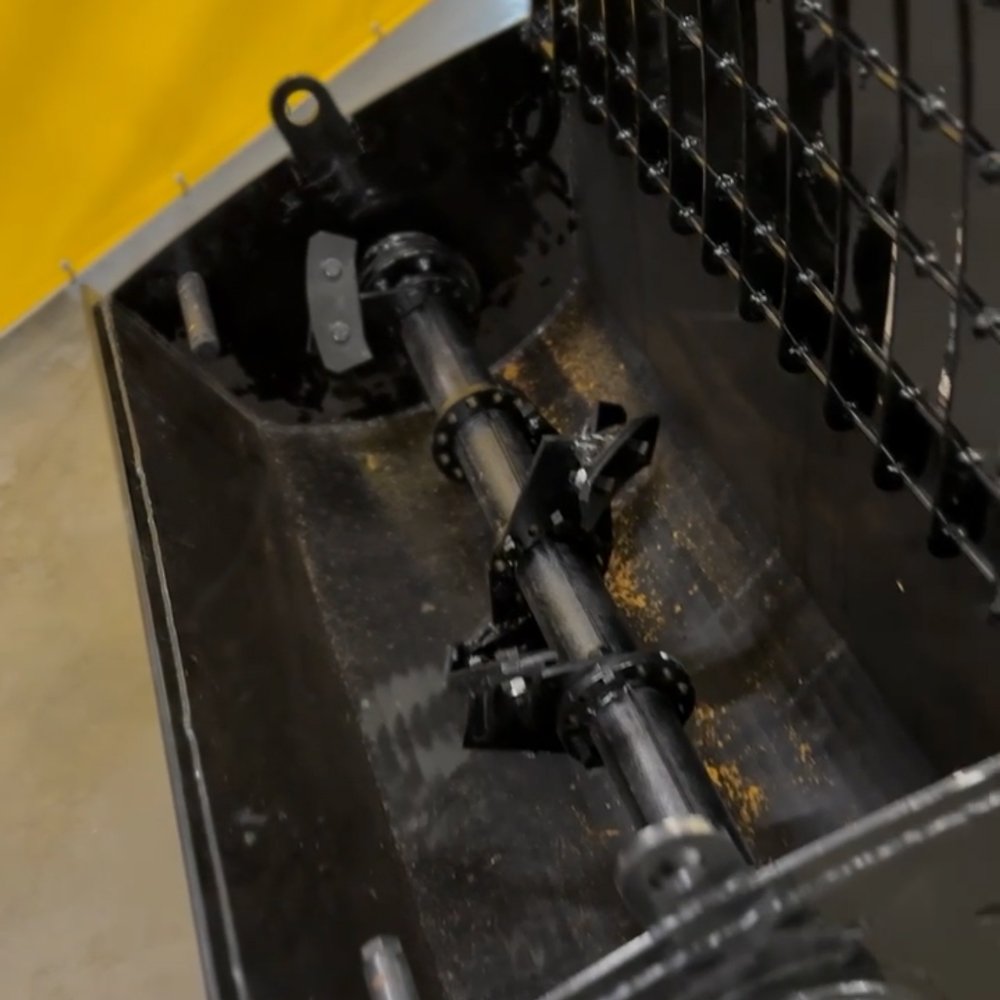
A concrete mixing bucket allows you to prepare and pour concrete in one place. The mix is ready and used immediately, so there is no need for transport.
One batch produces around 0.09 m³ of concrete. This is enough for small foundation sections, allowing steady work without rushing or waste.
Typical dimensions are around 720 x 870 x 595 mm, with a weight of approximately 165 kg and a load capacity of about 200 kg. These parameters ensure stable and efficient operation even in confined spaces.
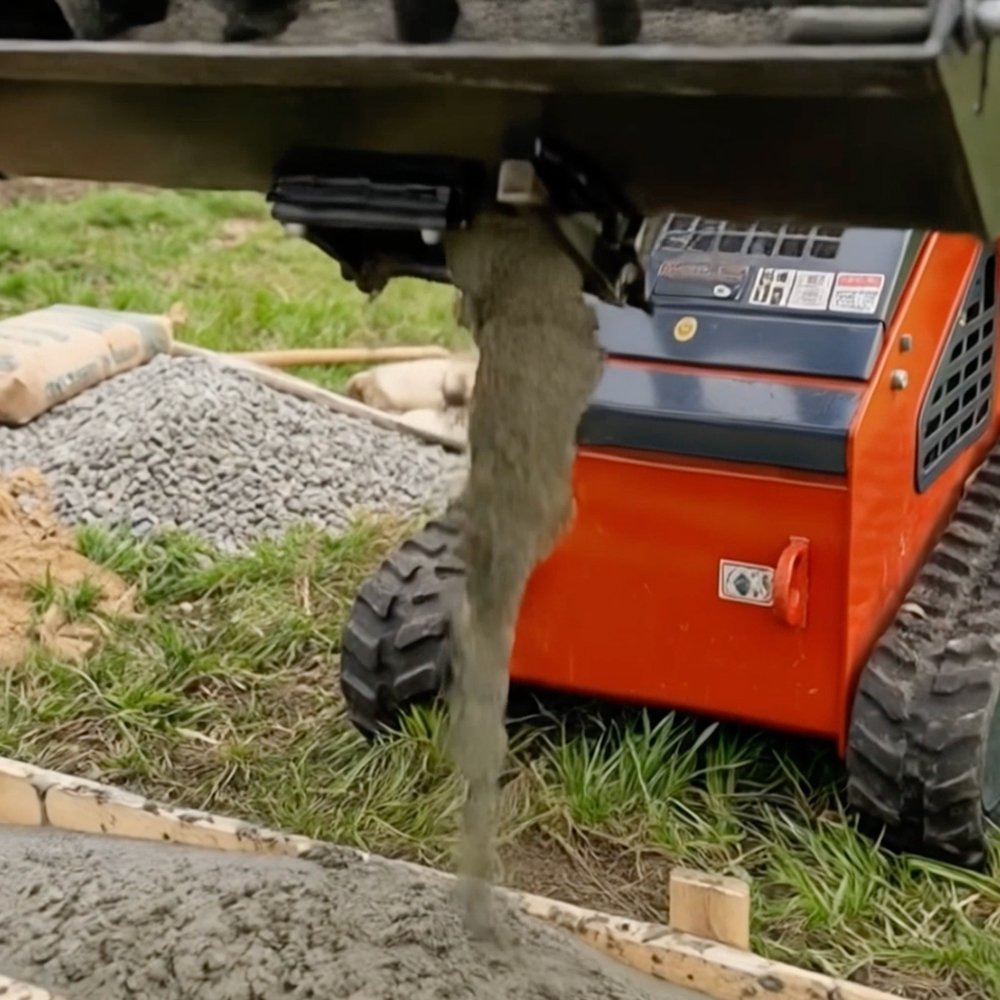
Once the mix is ready, it can be poured directly where needed.
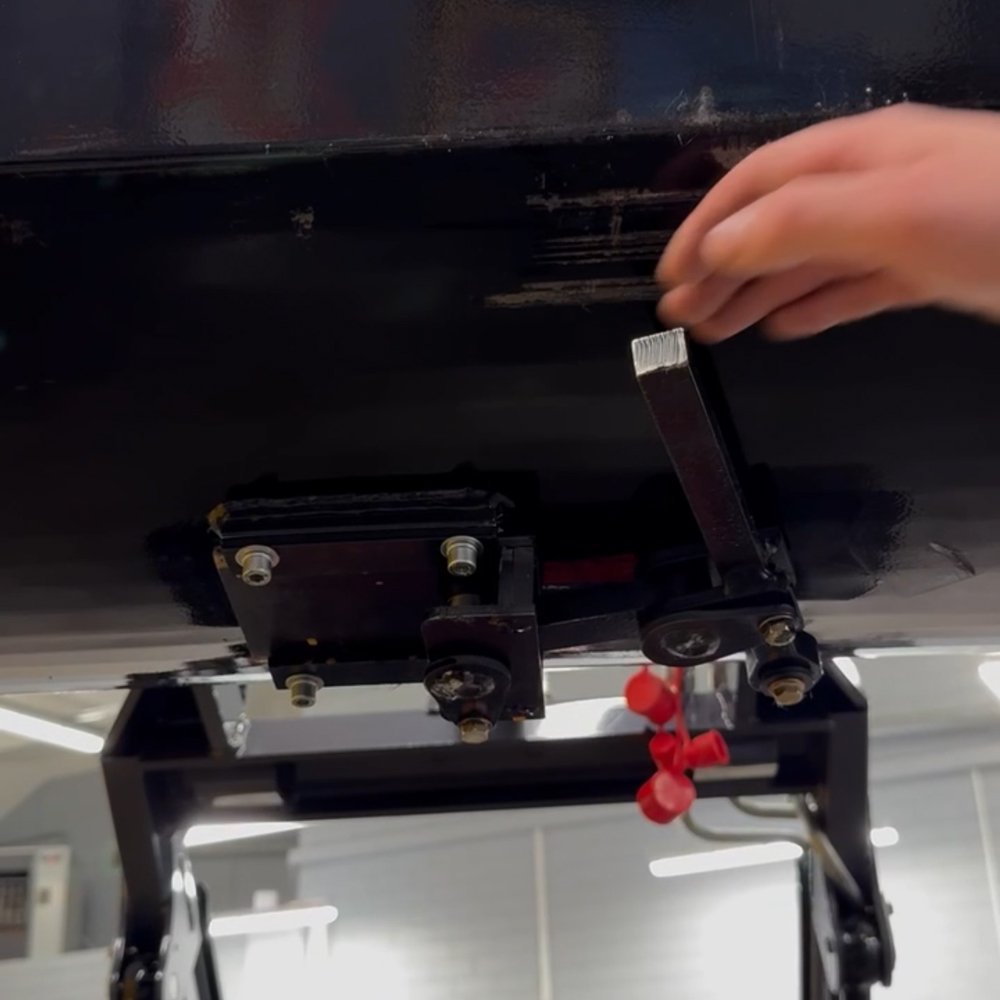
The bottom discharge system allows accurate placement of concrete without additional handling. There is no need for extra spreading or corrections, as the job is done in one step.
This makes the entire process clearer and more efficient, without returning to completed stages.
One batch produces about 0.09 m³ of concrete. Over a day, it is realistic to complete 10 to 15 cycles, resulting in around 1 m³.
This is enough for greenhouse foundations or several fence sections.
The workflow remains continuous, as there is no need to wait or prepare concrete separately from the work area.
A concrete mixing bucket costs approximately €1,512 excluding VAT. Financing options are available from around €137 per month.
The key factor is time spent on site. Two workers, constant movement and repeated tasks quickly add up to a higher cost than the equipment itself.
If this type of work is done regularly, the difference becomes clear.
The process becomes straightforward. Prepare the site, dig the trench, mix concrete next to the work area and pour immediately.
Everything happens in one place, without unnecessary steps or coordination.
Work progresses steadily, and results are visible without interruptions.
If you are planning greenhouse or fence foundations and want to avoid carrying buckets back and forth, it is worth seeing how this works in practice.
The key is simple. Concrete is prepared on site and used immediately.
The easiest way to evaluate this is to see it in real conditions. In a few minutes, it becomes clear how much this changes the workflow.
If you have a specific project, get in touch for consultation. You will quickly understand whether this solution fits your work and what setup is needed.
+370 628 87 761
sales@jekpo.com