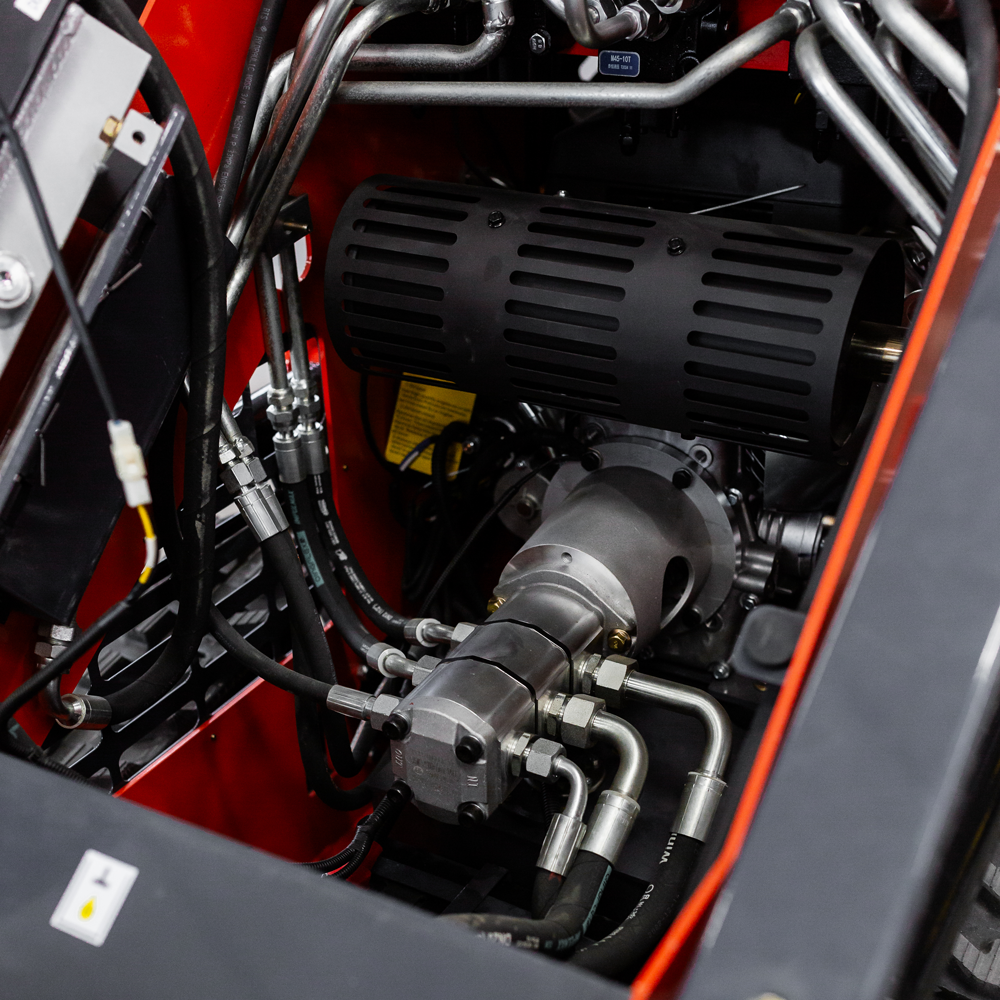
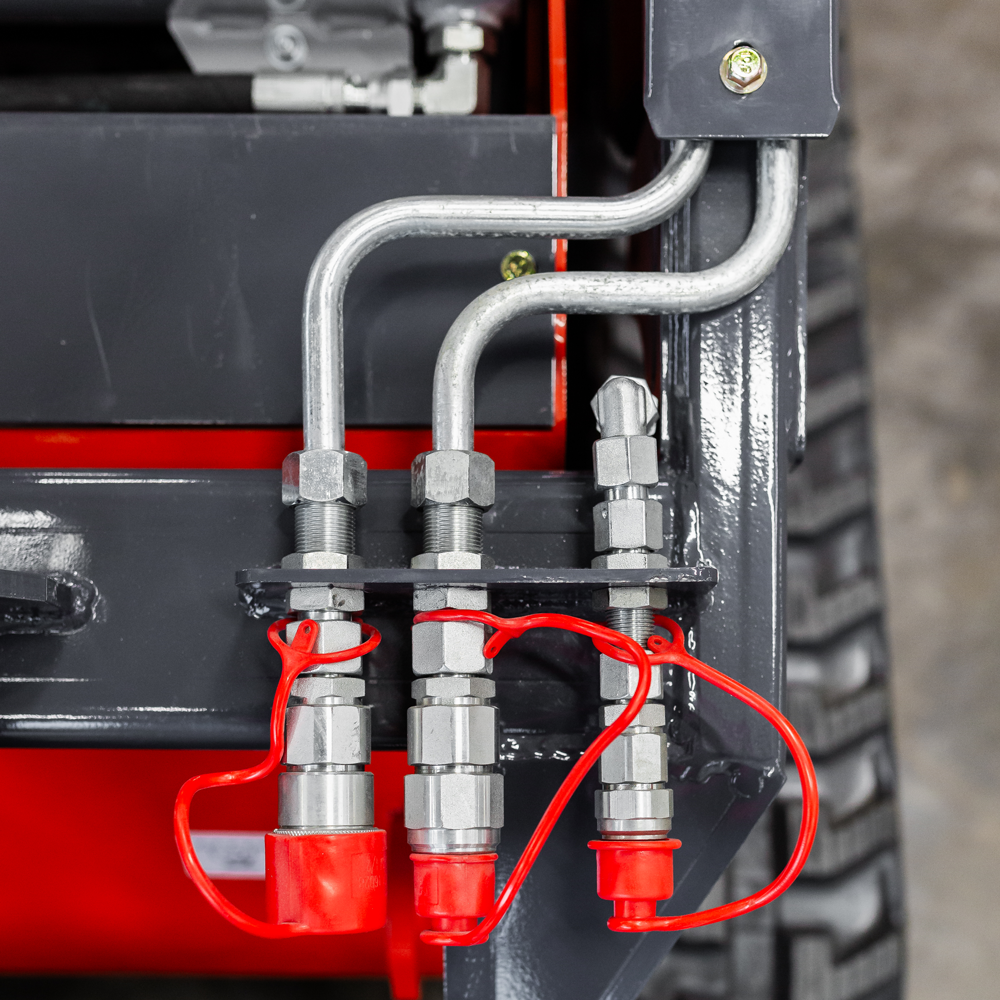
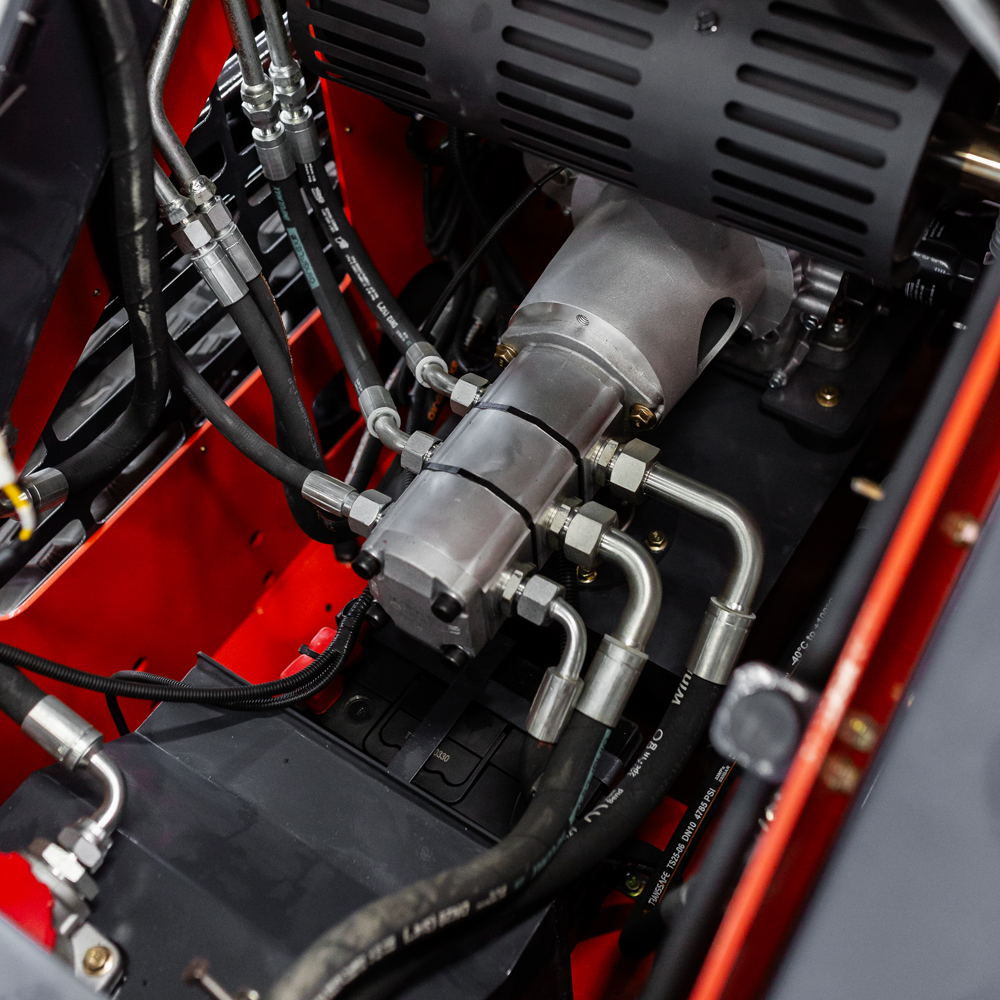
The third hydraulic function is the additional control channel that brings attachments to life.
If a quick coupler allows you to change tools in minutes, the third hydraulic function (3rd function) allows you to operate them exactly when needed: opening and closing a grapple, driving an auger, spinning a broom, controlling the jaws of a 4-in-1 bucket, or supplying oil flow to a trencher. In simple terms, it’s a separate hydraulic circuit with its own control—one that doesn’t borrow flow from lift or tilt functions, but delivers consistent, predictable power to the attachment.
Why isn’t the factory setup enough?
Basic lift and bucket tilt only handle machine movement—raising, lowering, dumping.
Most working attachments need an additional “channel”: to rotate, clamp, release, open. When you try to do this through the same control, you end up with a compromise: either the loader moves, or the attachment works. The third hydraulic function separates these actions and allows both to operate simultaneously—without awkward workarounds.
A proper 3rd function isn’t just a hose—it’s control
Real value isn’t created by flow numbers alone, but by how you control them. A button on the joystick or a well-placed cabin control lets you activate the attachment exactly when needed, without interrupting movement.
Flow must be smooth, without jerks; pressure must be sufficient so the attachment doesn’t stall under load. A grapple needs sensitive open/close control. An auger or broom needs steady rotation without choking when resistance increases.
Attachments that only “wake up” with a 3rd function
Log and branch grapples, 4-in-1 buckets with hydraulic jaws, side and rotary brooms, trenchers, augers, mulching heads, hydraulic thumbs—all of these fundamentally require a separate hydraulic flow and control. Without a third function, they become half-tools: mounted physically, but not truly operational.
Where money is lost—or gained—is in calibration
Even with a 3rd function installed, value is lost if the flow doesn’t match the attachment. Too little flow and the tool stalls; too much and oil overheats, components are overstressed, and service intervals shrink.
The right setup is rarely found on paper—it’s found in real use. A few passes under load show immediately whether the attachment is working properly or just “pretending.”
Safety and machine longevity aren’t theoretical here
Proper quick couplers, clean filters, correctly routed hoses, and protected lines at sharp edges—these details protect fingers, hydraulics, and time. A third hydraulic function earns its name only when it works without vibrating fittings, oil leaks, or improvised insulation that turns into a service call a week later.
How do you know if you actually need a 3rd function?
If at least once per day you’ve thought, “I’d change the attachment, but I’ll just do it this way”—the third function will bring direct return.
It removes the temptation to compromise. The attachment doesn’t just mount—it works when needed, without extra people or replanning. The more varied tasks you handle on a single site, the greater the payoff from a properly implemented 3rd function.
When choosing, what matters isn’t the sticker—it’s how it feels at the controls
Comfortable joystick control, fittings that don’t twist, stable flow, pressure matched to attachment requirements, and connection points where you actually work—not just at the base.
Then the third function becomes an invisible link you stop thinking about—because it doesn’t cause problems. It simply earns meters, hours, and reputation.
If you want to feel this difference in real conditions, not just read about it—visit us. At our showroom at Ateities g. 2, Dainos, Šiauliai, we’ll demonstrate third-function control with different attachments, configure it for your work, and fine-tune the details so that on your next site, attachments don’t just look ready—they work from the first button press.