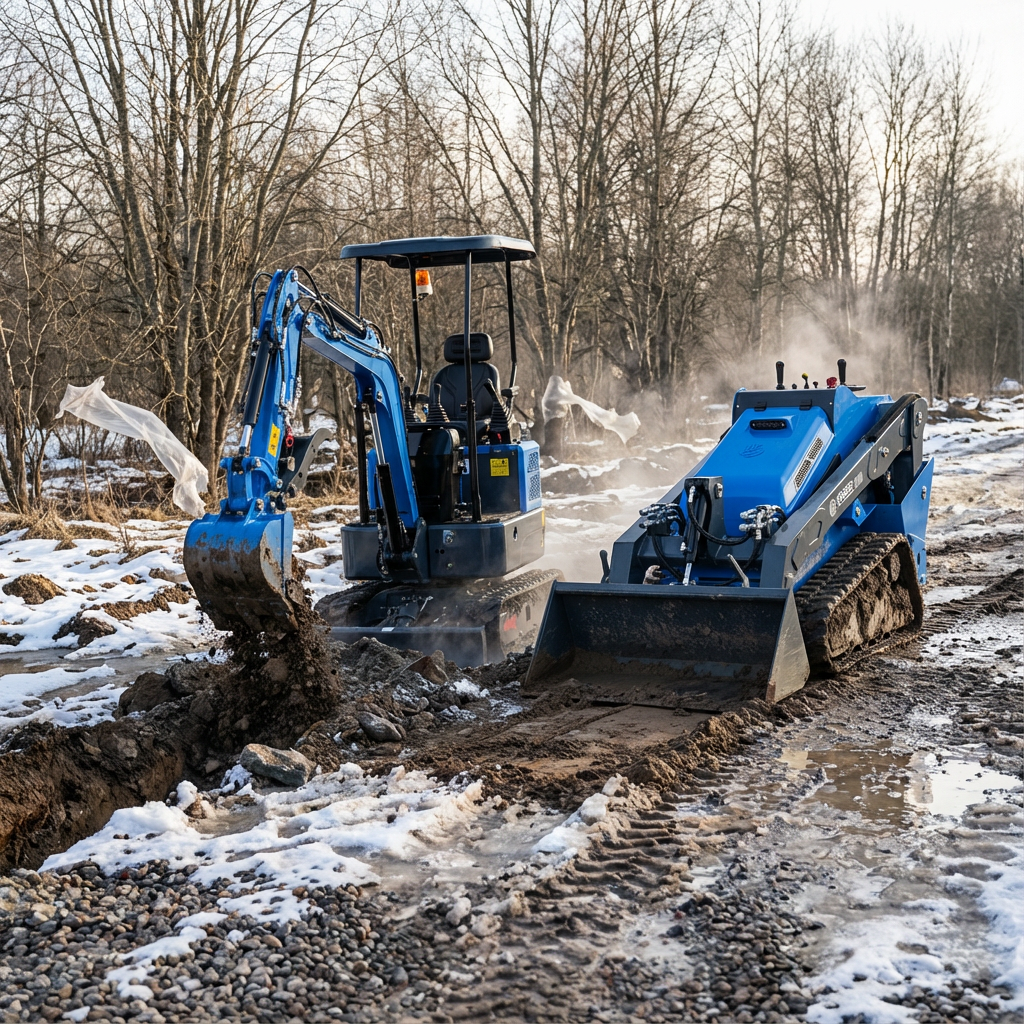
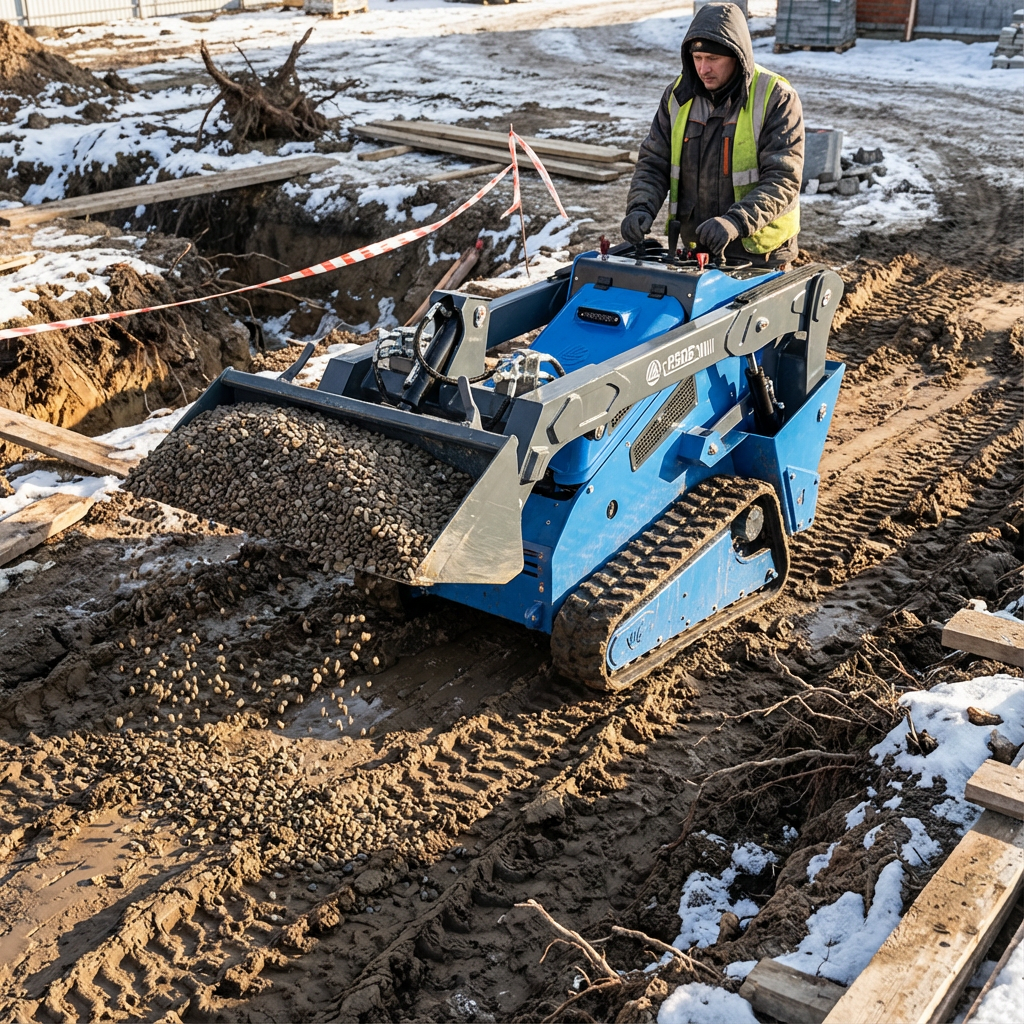
If you came here wondering whether a mini excavator or a mini loader suits you better, you’re not alone.
We hear this question on job sites almost every day, and the answer never depends on the model name—it depends on what you’ll actually be doing.
Most people choose machinery based on price or a friend’s advice. But on site, it’s not the label that matters—it’s the daily work.
When the plan is clear, the machine works. When the plan is vague, even expensive equipment turns into idle metal.
What will you be doing most of the time?
Not occasionally—but what will make up 60–70% of your work.
If one task dominates your day, choose the machine that does that task fastest and most accurately, not the one that can “kind of do everything.”
When should you choose a mini excavator?
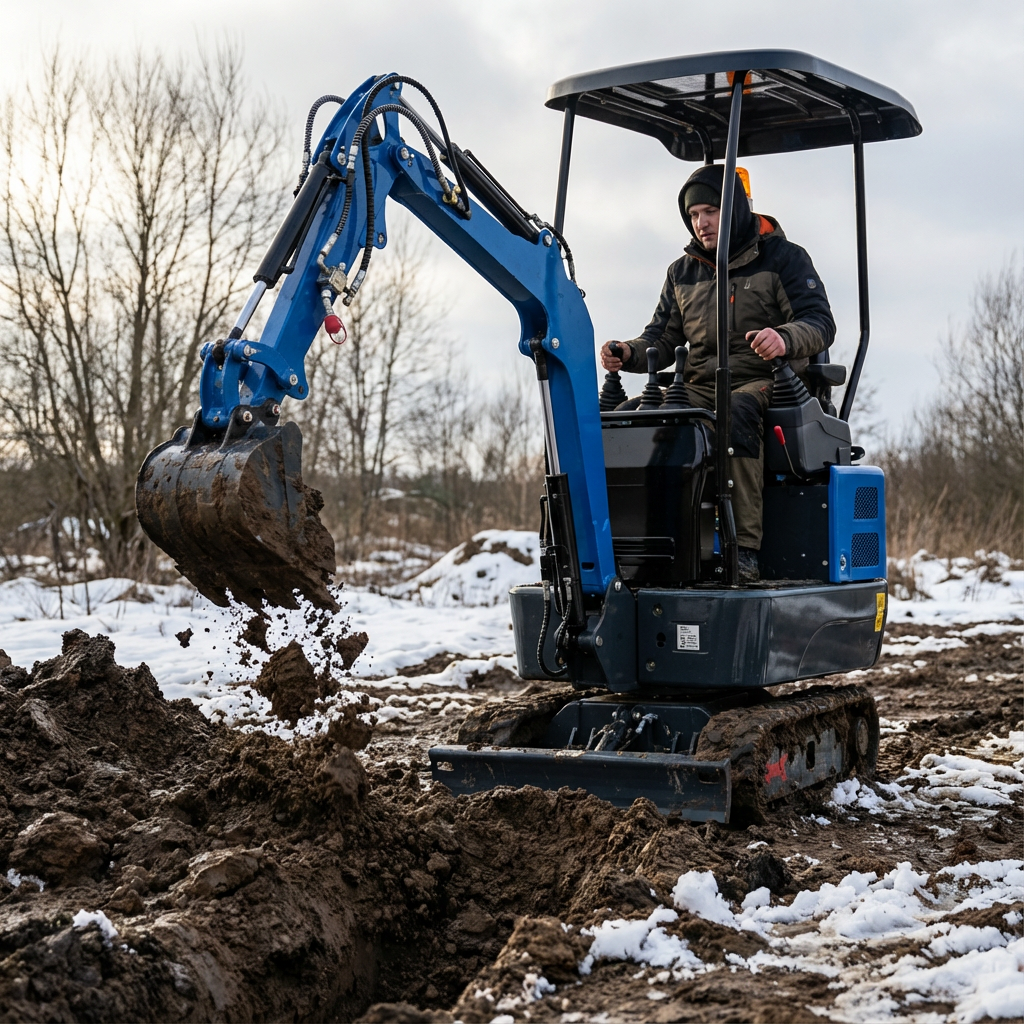
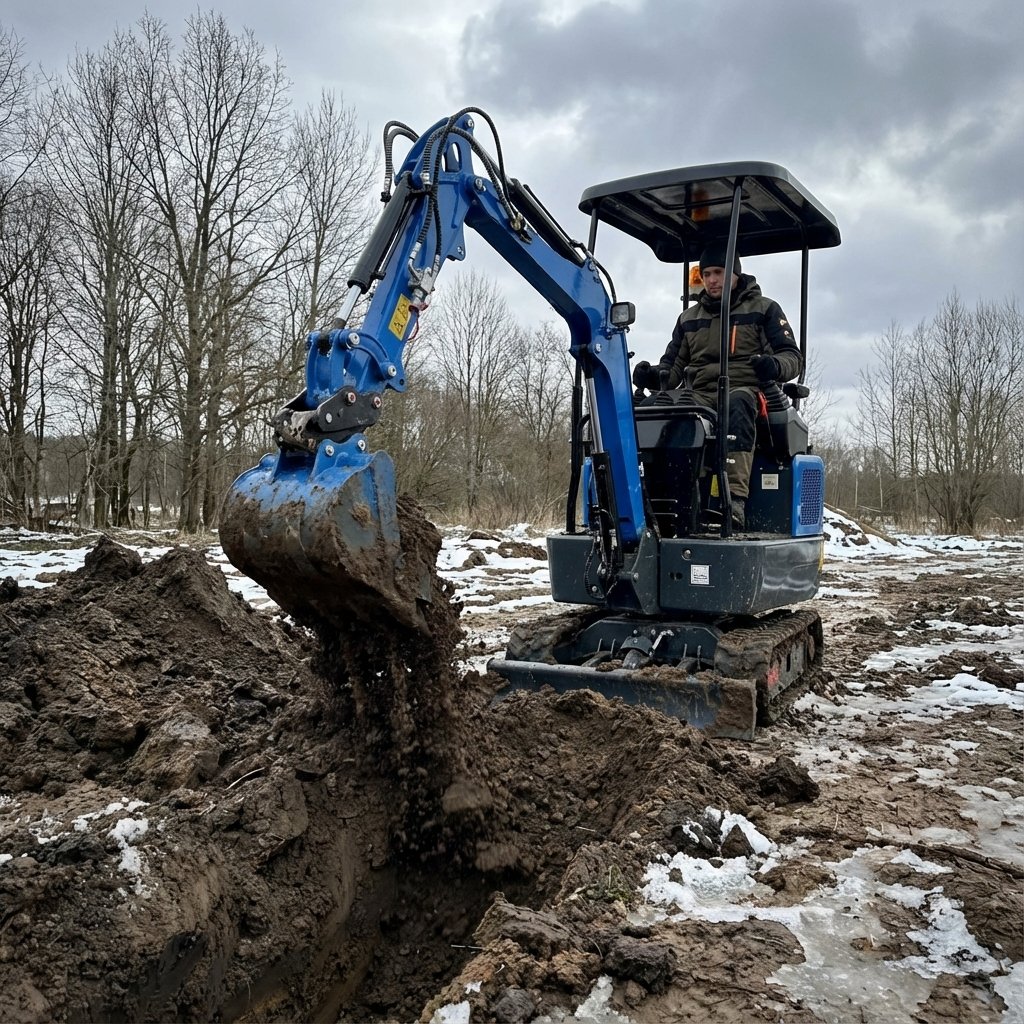
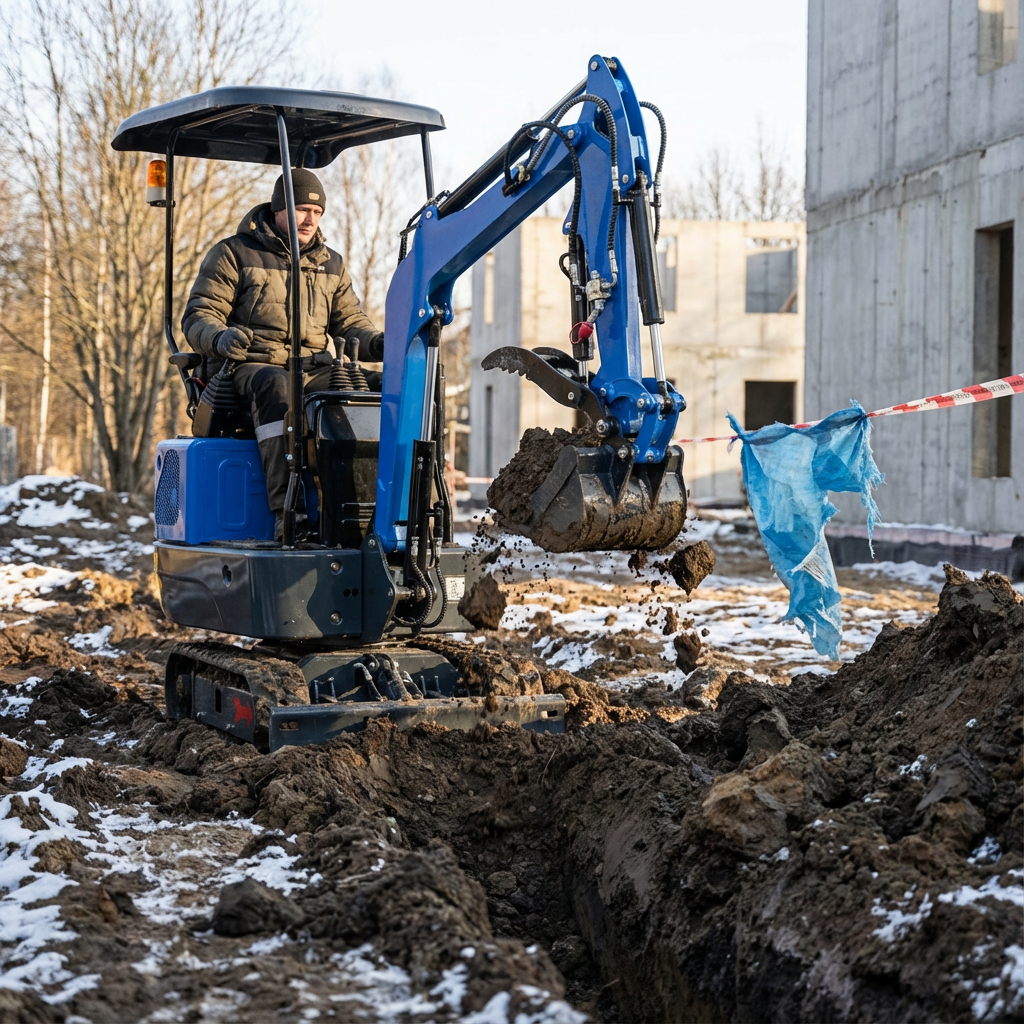
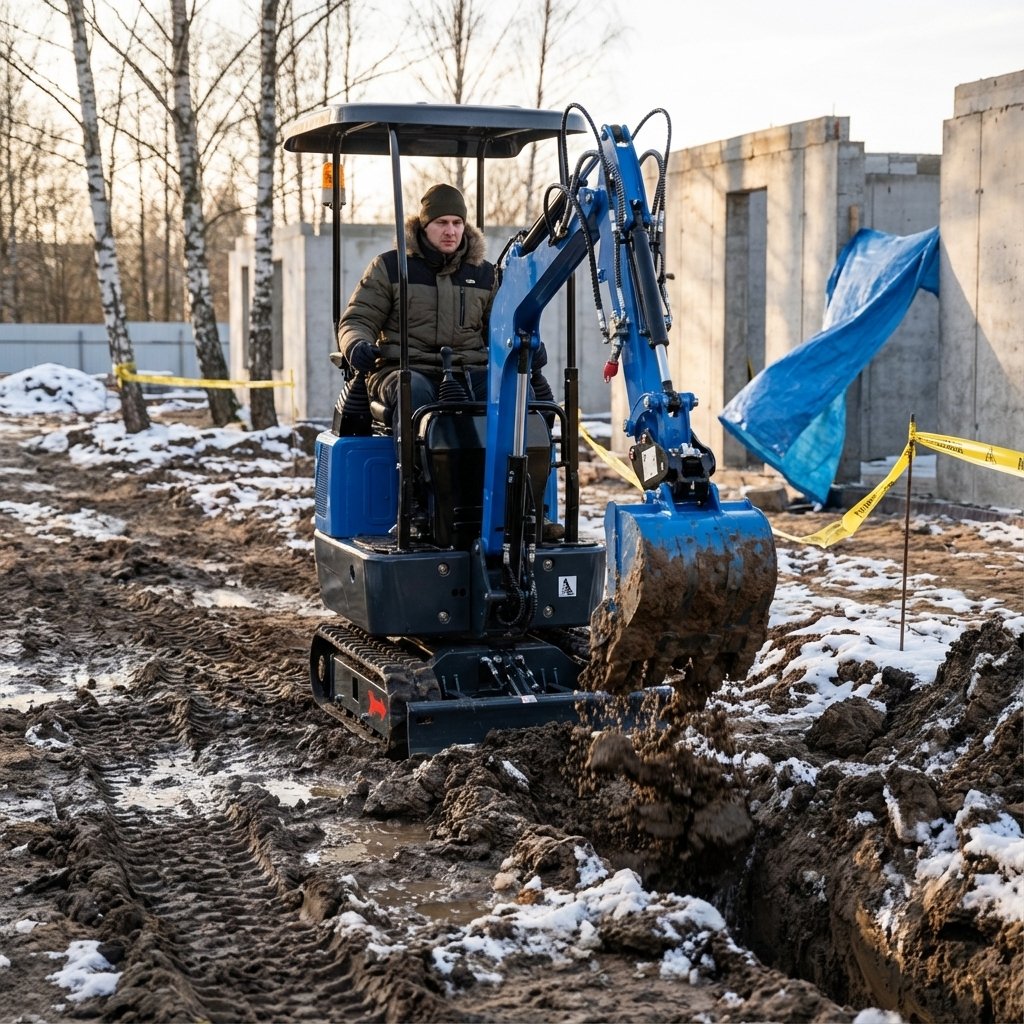
A mini excavator is the right tool when digging is the core job:
In crew language: an excavator works deep in one spot, makes a clean cut, reaches depth without stepped bottoms, and doesn’t roam the site unnecessarily.
You need precision, depth, and force—use a narrow bucket; if required, switch to a breaker and keep moving.
Fewer repositionings, fewer concrete corrections, cleaner results.
When should you choose a mini loader?
When movement and pace dominate:
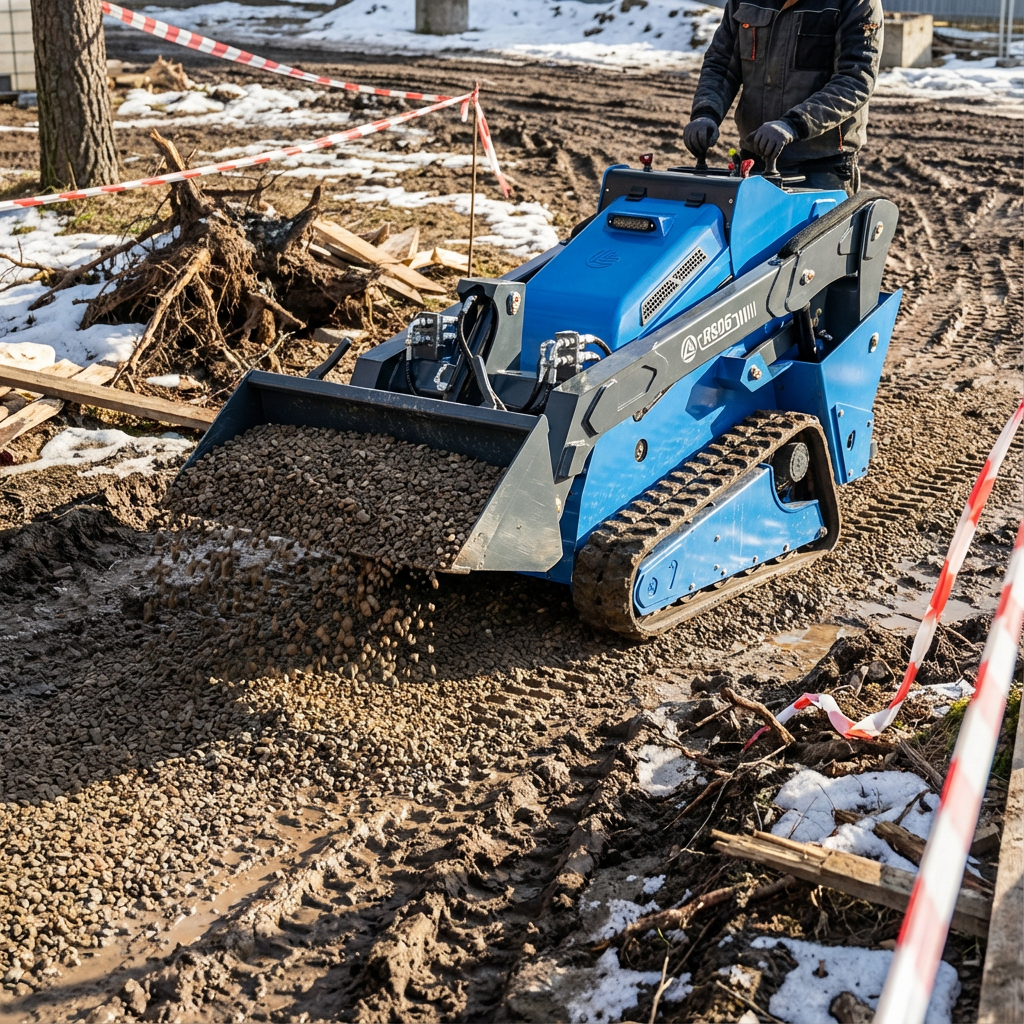
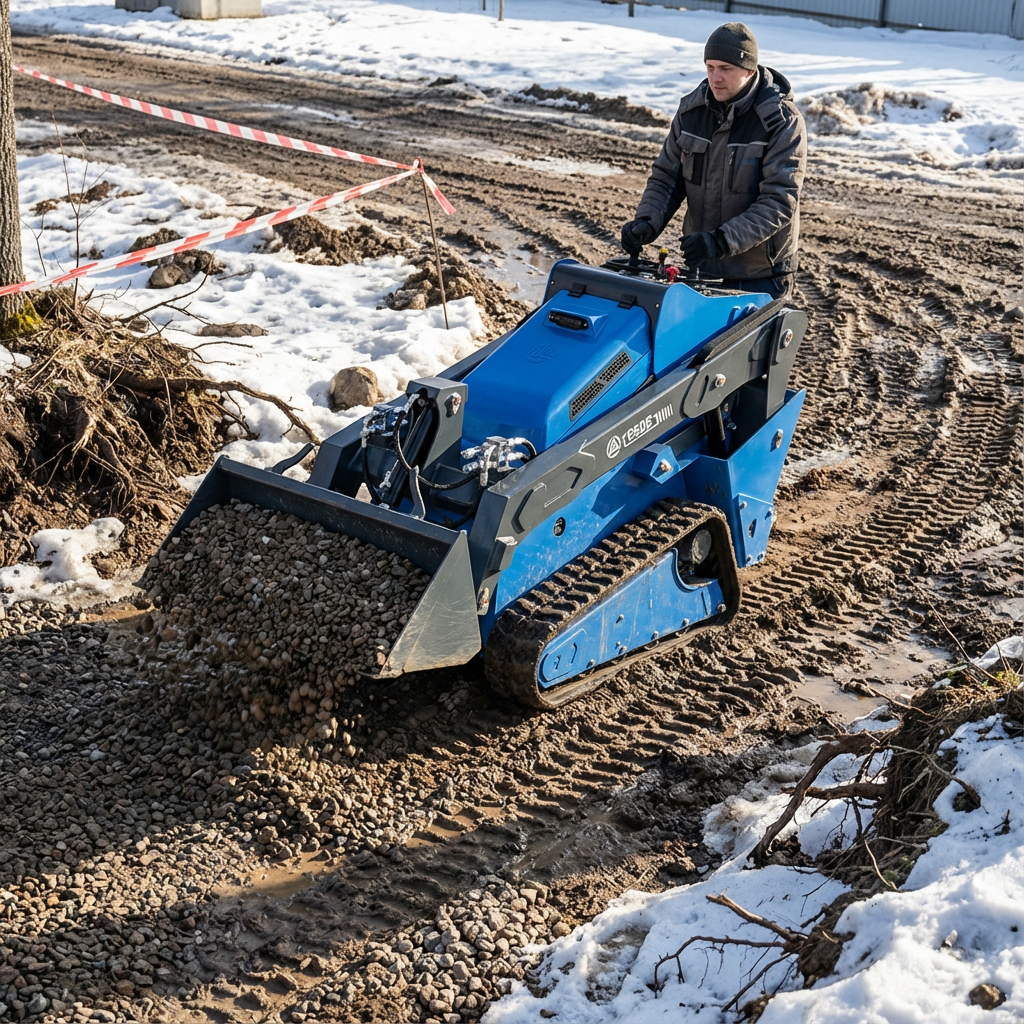
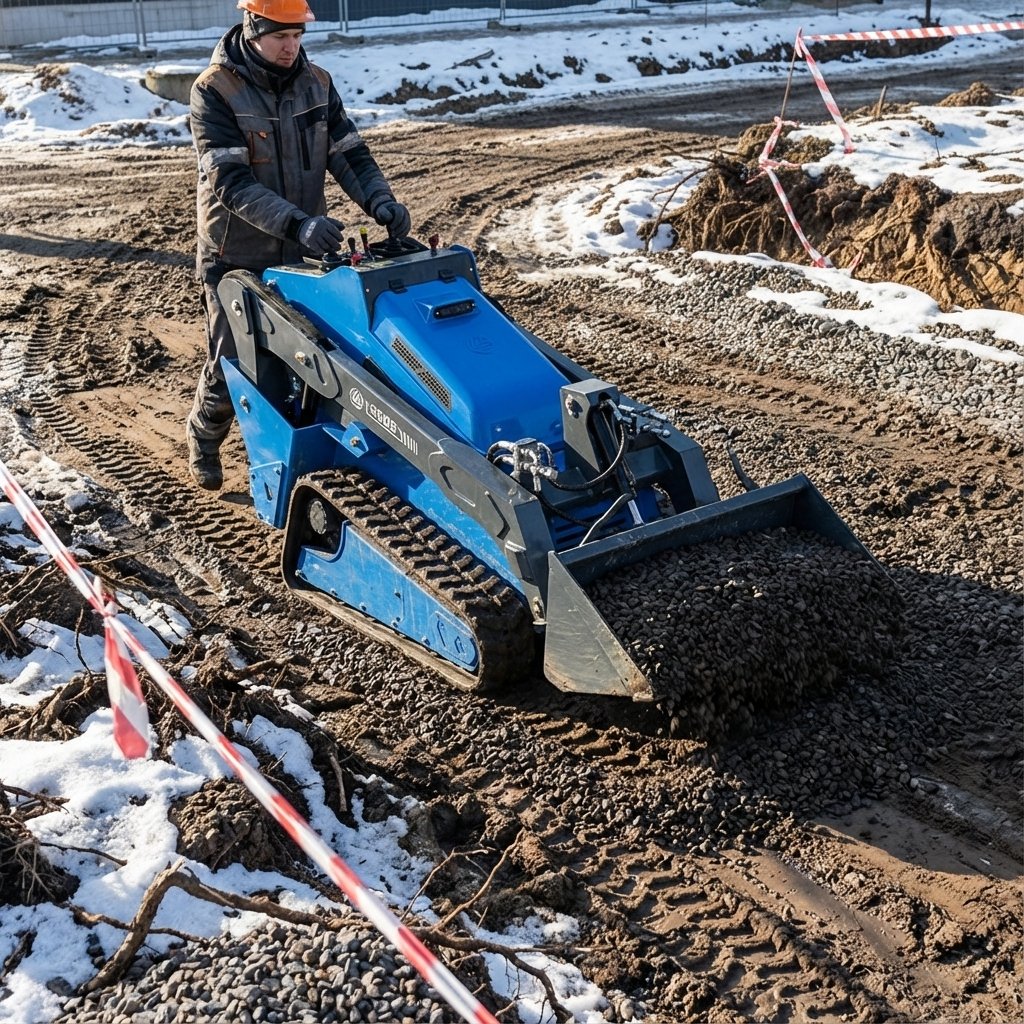
Simply put: in one pass you remove, move, and finish.
You change attachments on the spot and keep going—no schedule disruption.
A loader leaves a clean strip and visible progress every hour.
Why do people often choose the wrong machine?
A common mistake is buying an excavator because it looks more serious, even though 70% of the work would be done faster with a loader.
The opposite happens too: a loader is chosen while half the site consists of trenches and foundation details.
First list your tasks—then choose the machine.
Even the best model, doing the wrong job, earns less than a simpler machine that’s perfectly matched.
RIPPA – choosing based on work, not pictures
RIPPA mini excavators are built for digging, obstacles, foundations, and working close to structures.
RIPPA mini loaders are built for pace, pushing, leveling, and completing tasks in a single workflow.
We don’t just sell machines—we configure them for your real jobs.
Where owning the right machine really pays off
Foundation in a tight space, wet clay
A trench 80–100 cm wide, barely enough room for the bucket, collapsing sides.
A mini excavator with a narrow bucket (30–40 cm) is ideal—add a breaker if rocks appear.
A quick coupler allows attachment changes on the spot.
A loader here would cut too wide, force edge corrections, and double the work.
Result: straight trench, clean edges, concrete poured on time.
Gravel and crushed stone yard with slope and clean edges
Material needs to be removed, spread, and leveled.
A loader with a grading bucket or 4-in-1 bucket forms the slope, then a roller or vibro plate compacts it, and a broom finishes edges.
With an excavator, leveling takes longer and leaves waves—more passes, more fuel.
With a loader, you see the site take shape in a single day.
Overnight snow, clean access needed in the morning
10–15 cm of wet snow, tight parking areas.
First pass: loader with snow blade clears the surface.
Same loader stacks snow with a bucket, finishes edges and gates with a broom.
An excavator can do it in an emergency—but slower, with more maneuvers and higher risk of damage.
The loader delivers a cleaner result on the first pass.
Practical conclusion
The first step is planning the work, not buying equipment.
Write down your tasks in percentages:
Then the decision is obvious:
-
Mostly digging → mini excavator
-
Mostly movement and finishing → mini loader
-
Both → configure a duo with fast attachment changes
Choose your direction:
Mini Excavators · Mini Loaders · Attachments
If you’re planning for 2026 projects, talk to us now—so you don’t have to change decisions mid-season.
Visit our JEKPO physical store at Ateities g. 2, Dainos (Šiauliai).
In 15 minutes, we’ll structure your work, select the right RIPPA excavator or loader based on your 60–70% task load, configure attachments, and build a workflow without downtime.
📞 +370 628 87 761
🌐 jekpo.com