Trench digging often looks like a small part of the job. You start thinking you’ll finish quickly and move on. But very soon it becomes clear that everything is slower than expected. The trench is not as straight as it should be, the depth varies, and you have to stop and fix it.
Time passes, the job is not finished, and the next stages are waiting.
Why manual digging wastes the most time
When installing cables or pipes, accuracy is critical. It is difficult to maintain by hand. In one place you dig too deep, in another not enough. You go back, level it, check again and adjust.
At first it feels like just a few minutes, but those minutes quickly turn into hours. By the time one trench is finished, half the day is gone.
What happens when the trench is not done right
When the trench is uneven, everything that follows becomes more complicated. Cables do not sit properly. Pipes require additional adjustment. Some areas need to be deepened, others filled.
A task that should be simple turns into multiple extra steps. Each of them takes time.
When it becomes clear you need a different solution
When distances increase or precise depth is required, manual digging starts slowing down the entire workflow. For short sections it may still work, but when you need to dig tens of metres, the difference becomes obvious.
At that point, the question is not how to dig, but what to use.
How to choose a trencher attachment for your work
The key is not the attachment itself, but the type of work you do.
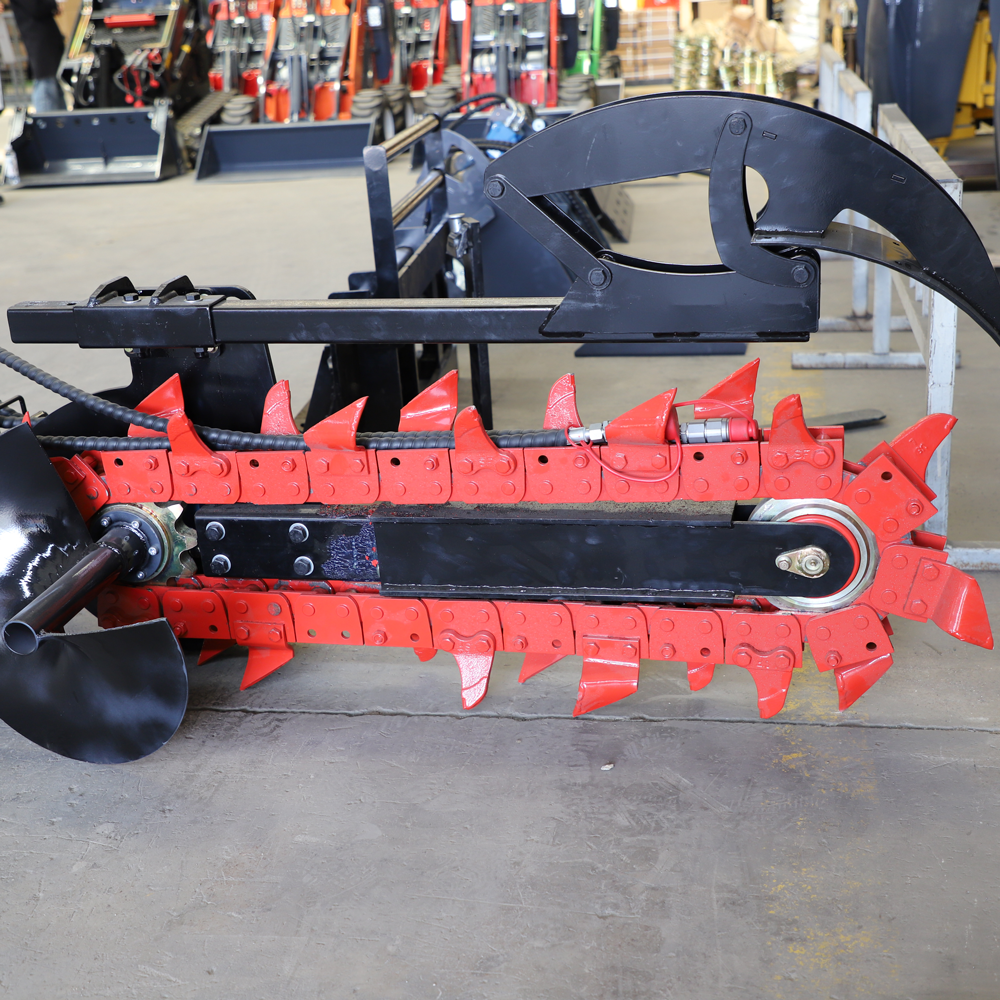
If you mainly install cables, water systems or irrigation, digging depth becomes the main factor. An attachment that can reach around 800 mm allows you to complete most jobs without extra digging or corrections.
Trench width also matters. Around 155 mm is sufficient for utilities while remaining narrow enough to avoid additional widening or edge correction.
Stability is another factor that becomes clear on site. A well-built attachment with proper weight creates a straight, consistent trench without constant adjustments.
It is also important to match the attachment to your machine. The trencher must work with your loader efficiently, not limit its performance.
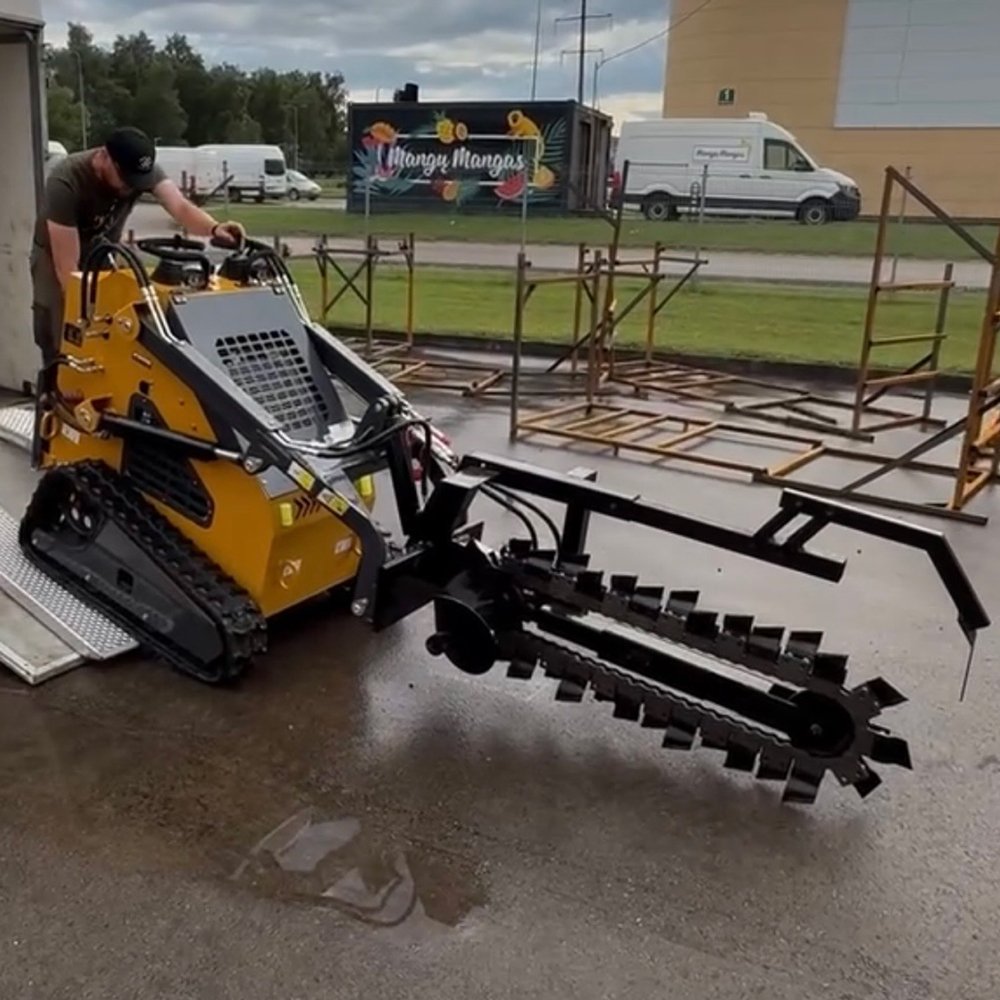
If you want to see a practical example, you can view the KR38 trencher attachment here: trenching-machine-attachment/
You can also explore all attachments here: loader-attachments/
What changes with the right setup
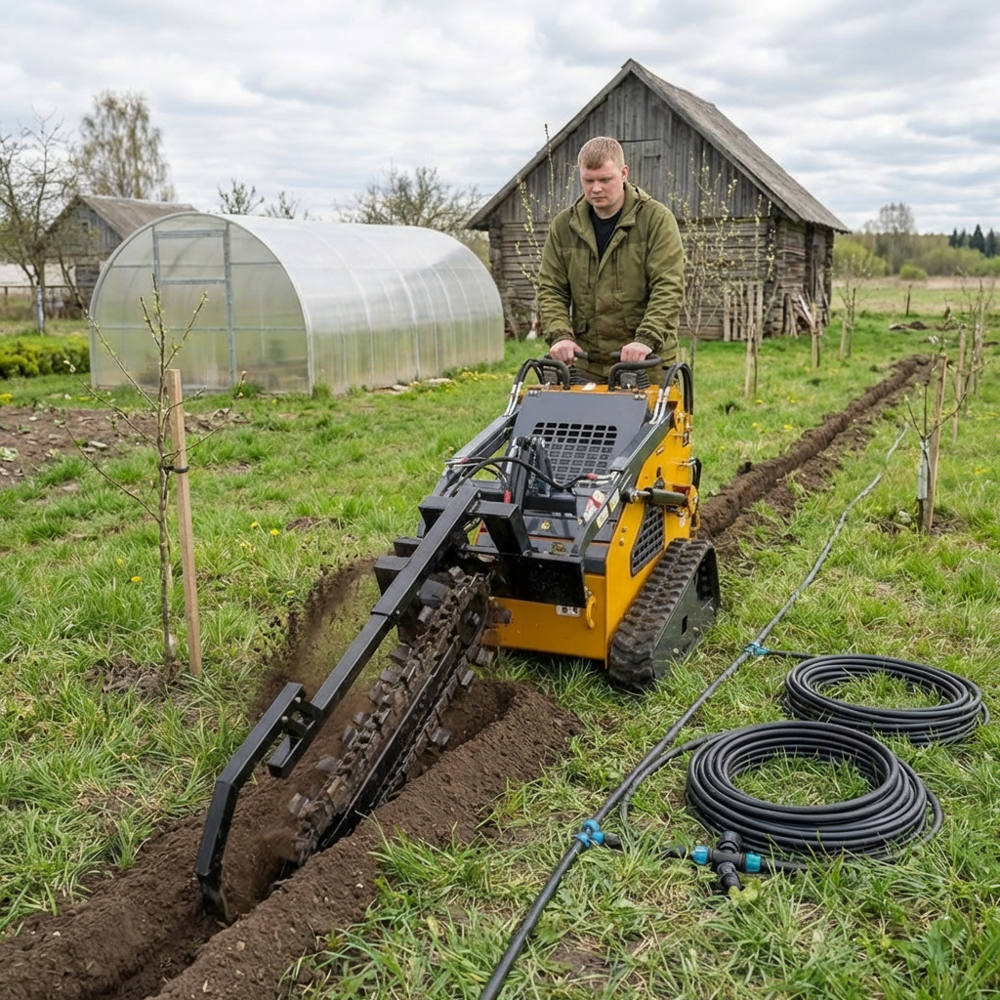
When the attachment is selected based on real work, everything becomes simpler. The trench is formed correctly from the start. Depth remains consistent, the line stays straight, and there is no need to go back and fix mistakes.
Cables are laid properly, pipes are installed without extra work, and the whole process moves forward without interruptions.
The biggest difference is not just in digging, but in how much time is saved across the entire project.
Conclusion
When a trench is done correctly the first time, the entire workflow changes. No rework, no corrections, no wasted time.
The key is not the attachment itself, but whether it matches your work and allows you to complete it right from the start.
Next step
If you want to avoid guessing and choose the right solution from the beginning, it is worth discussing your specific jobs.
Depth, soil conditions and machinery all differ, so the solution should be based on your actual situation, not a general description.