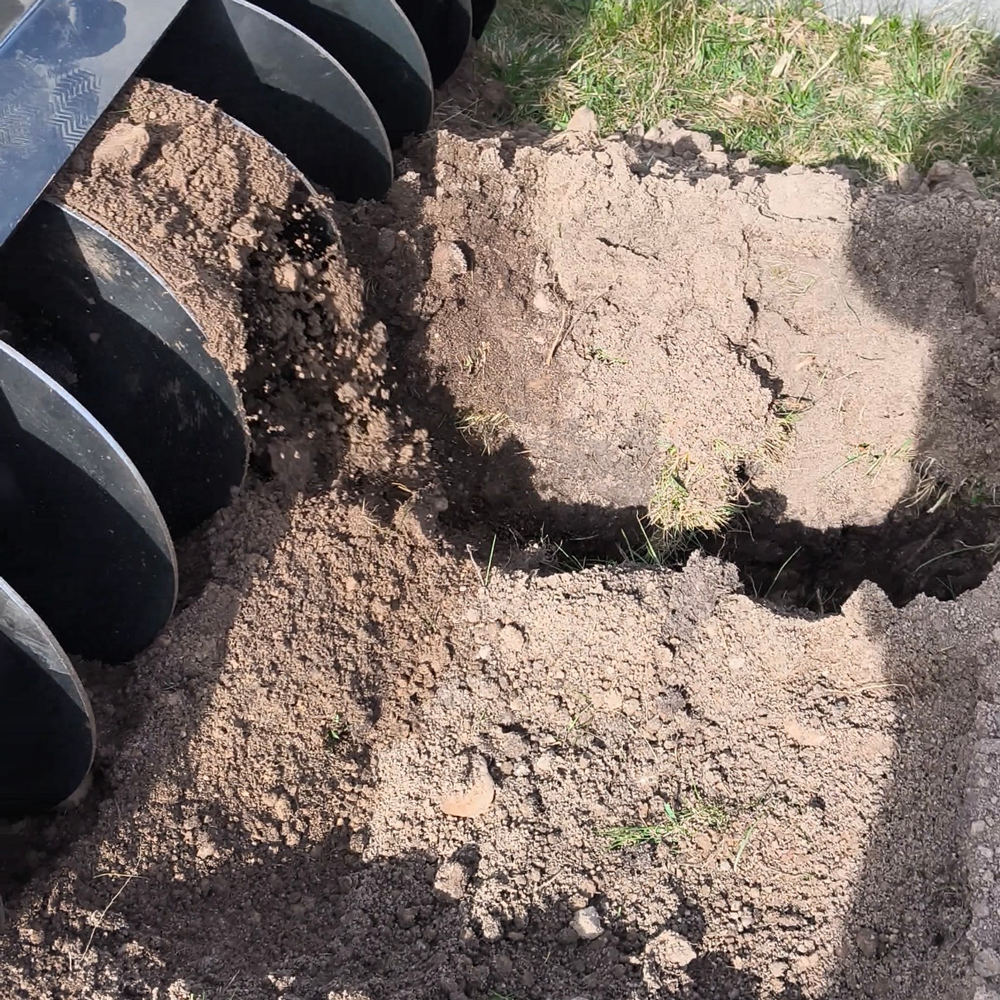
A trench compaction roller becomes relevant when you have backfilled a trench, but the surface is still uneven and the job is not finished.
In spring and early summer, trenching work increases. Irrigation systems are installed, cables are laid, drainage is built. Digging a trench is simple today, but the real work starts when everything needs to be finished so the surface is level, compact and ready to use immediately.
You backfill the trench and at first it looks fine. You drive over it and immediately feel the uneven surface. In one place it has settled, in another a mound has formed. You take a shovel, level it, drive over it again and still see that the result is not good enough.
At that point it becomes clear that digging was only part of the job, and backfilling takes longer than expected.
When working with a standard bucket or manually, soil is distributed unevenly. While loading and moving, some material spills over the edges, leaving parts of the trench underfilled. In other areas, too much soil is placed, forming soft mounds that later settle.
Then the repeated cycle begins. You go back, level it, drive again and fix it once more. The softer the soil, the more it changes under the machine. Some areas sink, others rise. The surface becomes unstable and unsuitable for machinery or seeding.
This is not about experience or speed. With a standard bucket, you cannot evenly distribute and compact soil at the same time. That is why the same work is repeated multiple times and each trench takes longer than it should.
A trench compaction roller is designed for the stage when the trench is already filled but the surface is not ready for use.
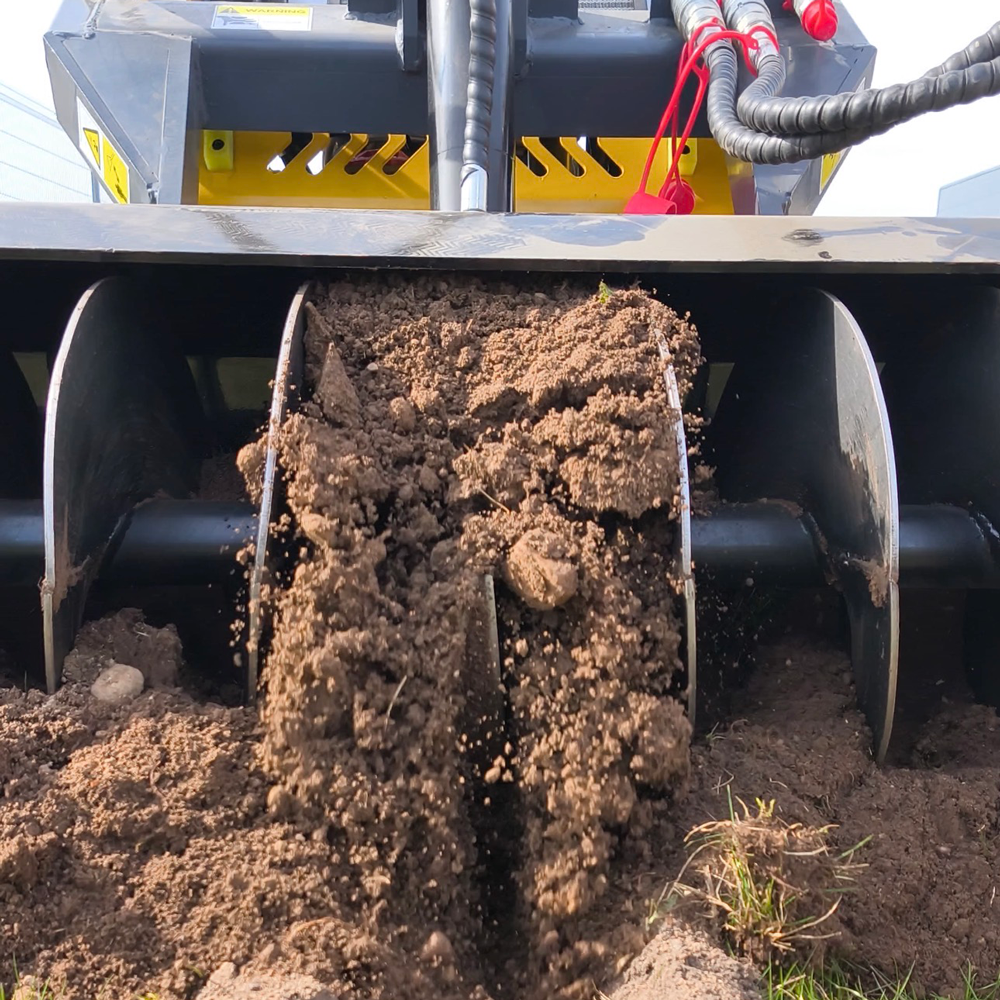
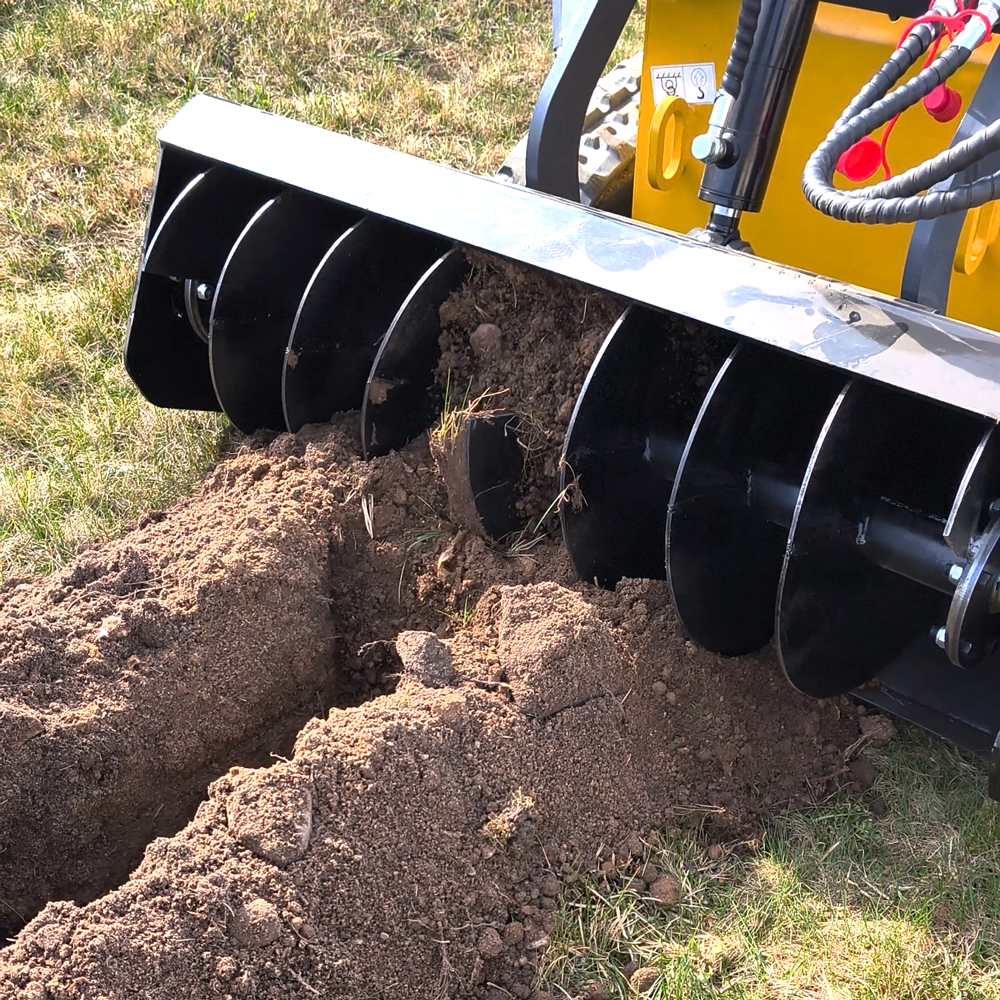
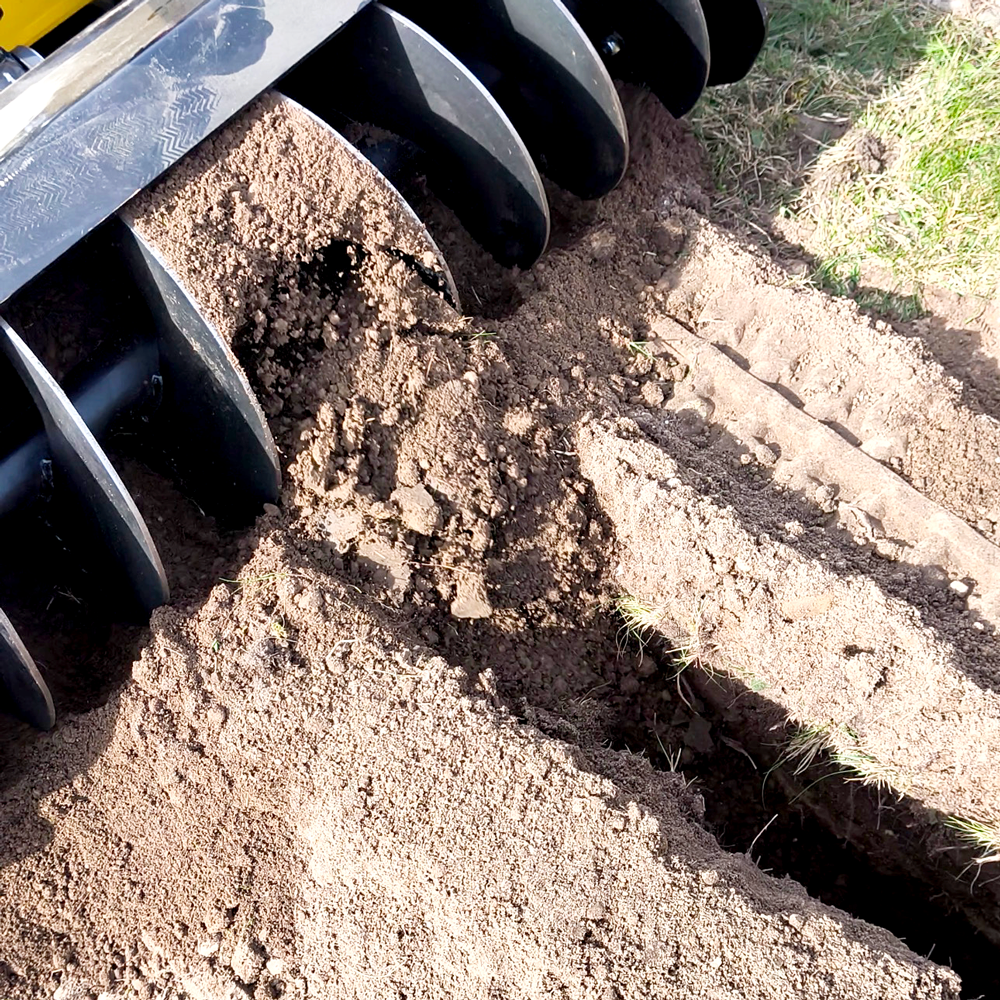
The JEKPO roller allows you to distribute and compact soil in a single pass, creating a level surface immediately.
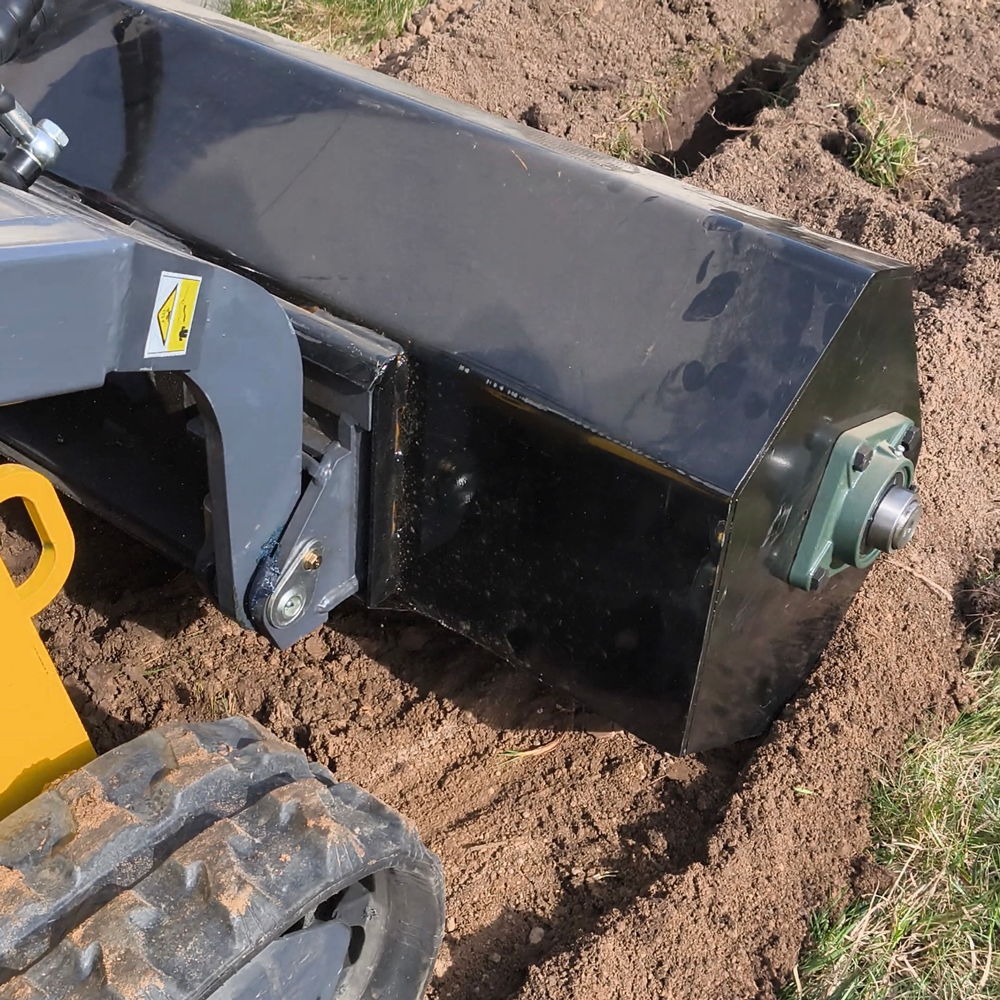
The attachment weighs 160 kg and has a working width of 1100 mm. This allows you to cover a standard trench and part of the surrounding area in one pass. The roller drum, connected to the loader’s hydraulics, applies even pressure across the surface, eliminating loose areas and soft layers that would later settle.
When used with a compact loader such as the JEKPO KR38, the entire process becomes continuous. You dig, backfill and finish the surface without changing equipment or losing time.
With a standard bucket, you usually pass over the same area multiple times. First you fill, then try to level, then correct what has settled. Often a second person is needed to level the surface manually.
With a trench compaction roller, the process becomes simpler. You backfill the trench and immediately compact it. In one pass, the surface is levelled and compressed.
There is no need to return to the same area or make additional corrections.
This directly impacts working time. Instead of multiple passes and extra labour, everything is done in one process.
A trench compaction roller is most effective when work is repetitive and the final result matters.
When installing irrigation systems, you often deal with dozens of metres of trenches. Levelling each manually means constant rework. With a roller, the entire area is finished consistently.
For drainage or cable installation, it is important that the surface does not settle later. Compacted soil ensures immediate stability.
On construction sites, uneven ground slows down machinery. A roller allows you to quickly create a firm and level surface.
When selecting a trench compaction roller, consider trench width, attachment weight and machine capability.
A working width of 1100 mm suits most standard trenches and allows work in one pass. A weight of 160 kg provides enough pressure for proper compaction.
It is important that the roller matches your loader’s hydraulic system. Compact loaders such as the KR38 are suitable, but larger projects may require more powerful equipment.
A trench compaction roller pays off when this type of work is done regularly.
If you need to backfill multiple trenches per season, the difference between one pass and several becomes clear.
Each trench completed in one go saves time, fuel and reduces physical effort. Over a week, this can mean completing more jobs or shortening working hours.
A trench compaction roller allows you to finish the job in one pass, where a standard bucket requires multiple corrections.
The surface becomes level, compact and ready to use immediately.
If you often face situations where backfilling still requires fixing, it is worth seeing how this works with the right attachment. The JEKPO team can assess your situation and recommend a solution that helps you work faster and more accurately.
Trench compaction roller: https://jekpo.com/en/p/trench-backfilling-roller/
Mini loader KR38: https://jekpo.com/en/p/kr38-tracked-mini-loader-for-farm-use/