The RIPPA R10 mini excavator usually becomes relevant when small digging jobs start repeating every season.
You need to dig a trench for electricity, prepare drainage, install an irrigation system, remove an old stump, shape the ground near a house or handle several digging jobs on a farm.
Once, you can hire machinery. But when these jobs become more frequent, rental starts limiting your schedule, and work depends on someone else’s availability.
In these situations, the excavator price is not the only thing that matters. First, you need to understand whether the machine fits the real work.
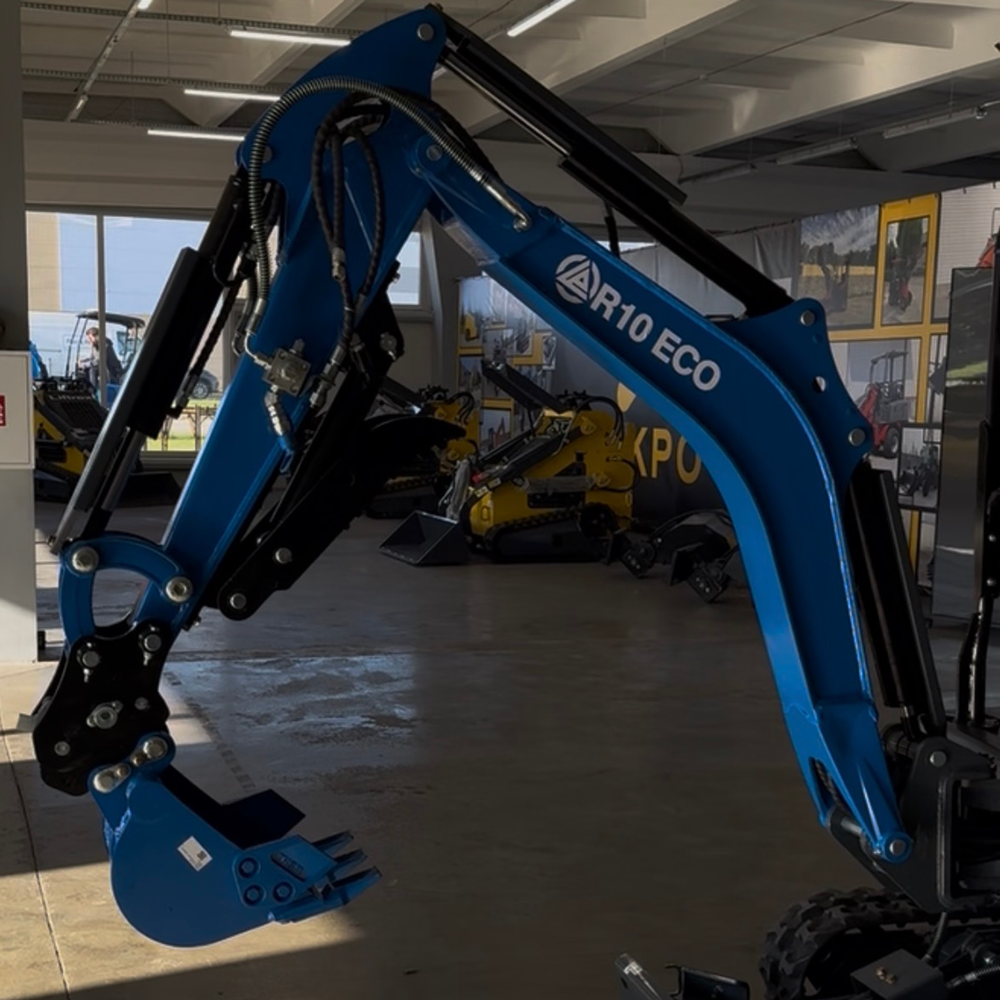
The RIPPA R10 is a compact, approximately 1-tonne class mini excavator for those who need a manoeuvrable, easy-to-control machine that can be used around their own property, farm or site.
The RIPPA R10 works best where jobs are not massive, but they keep coming back.
On a private property, this often means trenches for cables, water lines, irrigation systems or drainage. On a farm, it can help with water runoff, small ditches, root removal, ground shaping or digging near buildings.
Large machinery is often too wide and too heavy for these places. It is harder to access fences, foundations, greenhouses, trees or narrow passages.
A small excavator lets you work closer, more accurately and with less stress, especially when the yard, lawn or pathways are already finished.
The machine is on your property or farm, so you can work when needed. A job appears, you start the machine, finish it and do not wait for someone else to find a free day.
The RIPPA R10 belongs to the approximately 1-tonne mini excavator class.
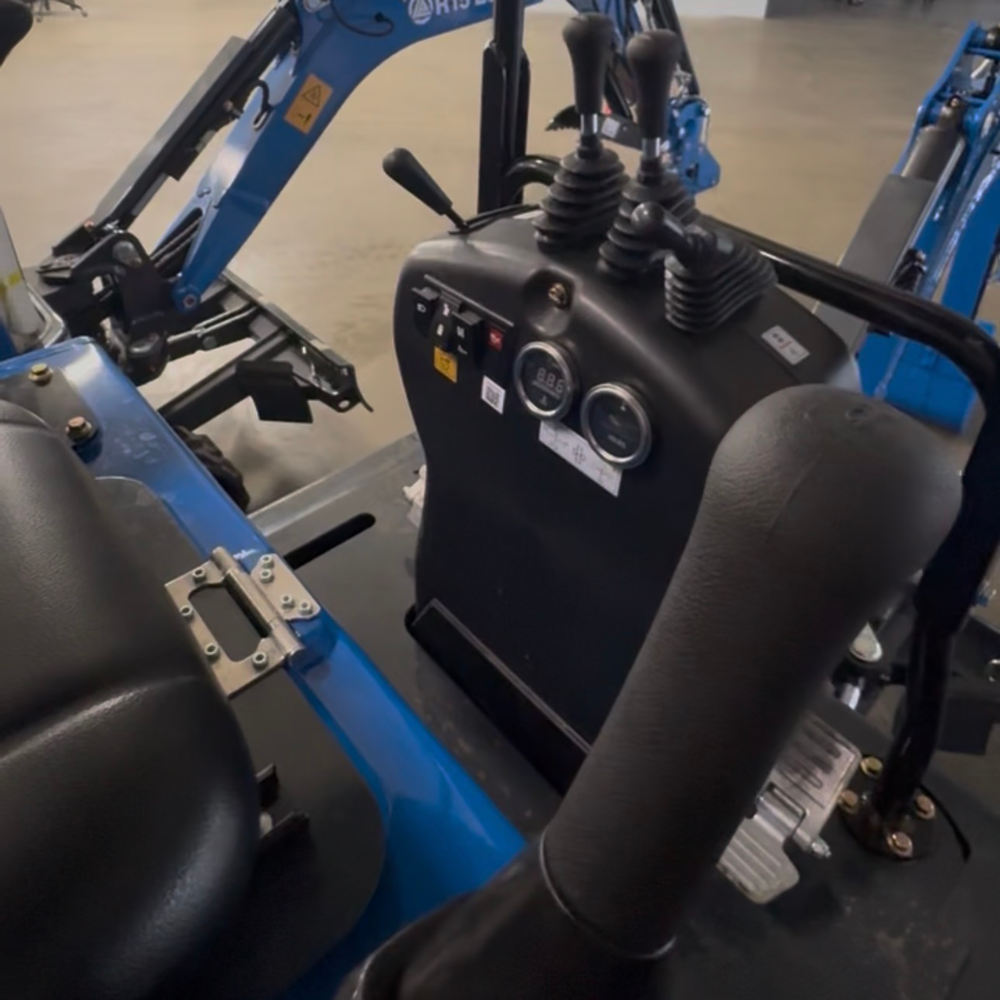
This means it is designed for small and medium-light digging jobs where access, accuracy and simple control matter most.
The R10 has a digging depth of 1833 mm, bucket capacity of 0.014 m³ and hydraulic flow of around 18 L/min.
These specifications are suitable for trenches, drainage, light ground shaping, root removal and various jobs around properties or farms.
If you plan to work constantly in heavy clay, dig deep trenches every day or lift heavier loads, it is worth looking at larger models such as the R13 PRO, R18 PRO or R22 PRO.
The R10 is strongest when you need a compact machine for frequent, clear and not overly heavy jobs.
The RIPPA R10 can be configured with a KOOP or Kubota engine. The right choice depends on how often and in what conditions the machine will work.
The KOOP engine suits users looking for an economical solution for property, farm or seasonal work.
If the excavator will be used regularly, but not every day for long hours, the KOOP version is often enough. It is a practical choice when price, simple operation and clear personal use matter.
The Kubota engine is better suited for more intensive use.
If the machine will work often, for longer hours and in commercial jobs, Kubota is the stronger long-term choice. This engine is valued for reliability, durability and easier servicing.
If the R10 is bought for a property or farm with seasonal jobs, KOOP will often be a logical option.
If you plan to work frequently and for long days, Kubota is worth choosing.
The value of a mini excavator depends heavily on its configuration.
The excavator itself digs, but attachments decide how many different jobs you can complete with the same machine.
A standard digging bucket is used for trenches, drainage, cables and general digging work. It is the main attachment needed on most sites.
A narrow bucket is useful for clean, narrower trenches, irrigation systems and electrical cables where you do not want to disturb more ground than necessary.
A wider grading bucket is used for levelling and spreading soil after digging. It is useful when preparing a yard, driveway or site after construction.
A hydraulic thumb allows you to grab stones, branches, stumps and construction waste. This feature is especially useful on private properties because many things need not only to be dug out, but also moved away from the working area.
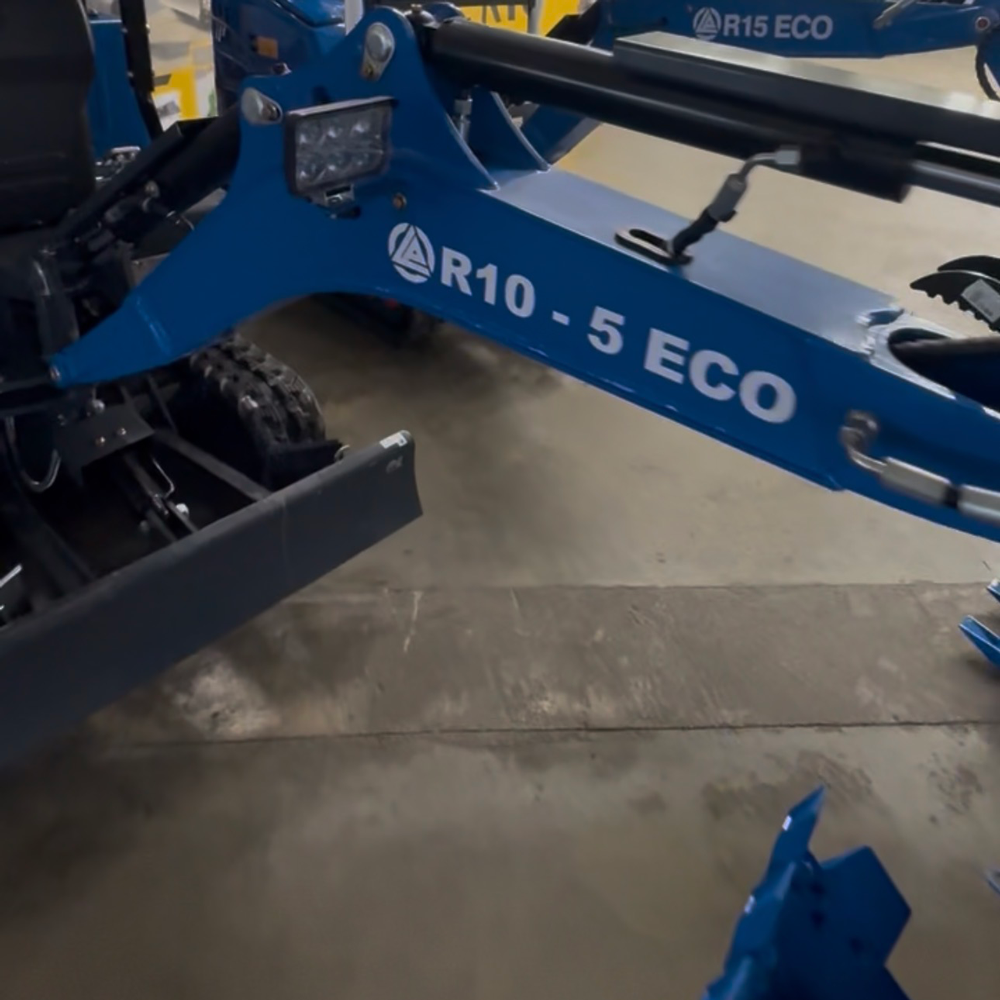
A swing boom helps work near fences, foundations and walls without constantly repositioning the excavator.
Rubber tracks cause less damage to finished yards, lawns and paths than steel tracks, making them suitable for work near houses and garden areas.
For property owners, the RIPPA R10 is useful when small digging jobs keep appearing.
One day you need to run a cable for a gate, another time prepare an irrigation system, later fix water runoff or remove an old root.
These jobs look small, but without machinery they quickly become long and uncomfortable.
For farmers, the R10 helps maintain infrastructure without extra waiting.
You may need to dig a small ditch, repair drainage, prepare post holes, tidy an area near a building or remove roots. When the machine is yours, you do not need to look for someone to come for every small job.
In construction and landscaping, this model is useful where large machinery does not fit or would be too rough.
Near a house, fence, terrace, foundation or in a narrow yard, a small excavator allows precise work and leaves less mess around the site.
You can buy an R10 and be disappointed if the decision is made without a clear list of jobs.
The first mistake is choosing only by price.
A mini excavator should be evaluated by the type of work: soil conditions, trench depth, job frequency and required attachments. If you only know the price, it is easy to choose the wrong model and start looking for another one after one season.
The second mistake is expecting a 1-tonne excavator to do the work of heavy construction machinery.
The R10 is very useful, but it has limits. When the work is too heavy or too frequent, it is better to choose a larger model from the start, because buying twice always costs more than buying correctly once.
The third mistake is delaying maintenance.
Hydraulic oil, filters, hoses and tracks must be checked regularly. Machinery that works with soil needs timely maintenance, because even a small issue can stop work at the worst possible moment.
The fourth mistake is ignoring service support.
An excavator should not only have a price and a photo. It needs servicing, spare parts and someone who can explain what to do if something starts working incorrectly.
The RIPPA R10 pays off when jobs repeat.
If you only need digging once a year, rental is often enough. If digging jobs appear every season, and sometimes several times per month, owning a machine starts changing the whole working rhythm.
When renting machinery, you are not only paying for digging. You pay for arrival, time, coordination and waiting. You also need to adjust to someone else’s schedule.
Your own machine allows you to work when the weather is right, when the ground is suitable and when you have time.
On a farm or private property, this matters a lot.
Work rarely happens in one day. Sometimes you dig one section today, another next week and finish when materials arrive.
With your own machine, that process becomes much easier.
JEKPO does not start with the model name.
First, we need to understand what the machine will actually do: soil type, trench width, how often it will work, whether it will only dig or also lift, grab, level, remove roots or move stones.
For one person, the RIPPA R10 will be the right choice. For another, it may be better to look directly at the R13 PRO, R18 PRO or R22 PRO.
This evaluation helps avoid situations where the machine is too small for the planned work or too large for everyday property use.
You can visit and inspect the machinery before buying, and discuss the right configuration.
The JEKPO team helps with spare parts, tracks, filters and hydraulic hoses, so the machine can be maintained on time and does not stand still because of small, predictable parts.
If you are considering whether the RIPPA R10 is enough for your work, send RIPPA to JEKPO or email sales@jekpo.com.
Tell us what jobs you are planning, what ground you will work on and how often the machine will be used. We will help you choose a model that will actually work on your farm, property or construction site.