In our climate, snow is never a surprise.
It comes every year—sometimes light, sometimes wet, sometimes heavy enough to block every access overnight.
In a yard, on a job site, or in a parking area, the scenario is usually the same: movement stops, equipment can’t pass, and people grab shovels to try to break through.
Snow itself isn’t the problem.
The problem starts when you’re not prepared for it.
Hand shoveling is often seen as a “normal” solution—because that’s how it was done before.
A small area, a few people, for a short time.
But once snow volume increases, or when access must be maintained throughout the day, manual work becomes a bottleneck.
Manual snow removal means lost work hours, exhausted workers before noon, blocked access for vehicles and machinery, and a higher risk of slips and injuries.
The biggest losses aren’t even financial at first—they’re operational.
When one task is delayed, everything else starts stacking up behind it.
A common mistake is trying to use one solution everywhere.
But snow at a private home, snow on a construction site, and snow in a large parking area are three completely different tasks.
At a home, it’s usually enough to maintain basic access.
On a job site, the priority is quickly clearing work zones.
In a large area, the challenge is moving significant volumes of snow elsewhere.
Different situations require different solutions.
Before thinking about equipment, prices, or models, answer one key question:
What do I actually need to do with the snow?
Do I push the snow aside?
Do I need to lift and load it?
Do I need it removed quickly without manual labor?
Once this is clear, choosing equipment becomes much easier.
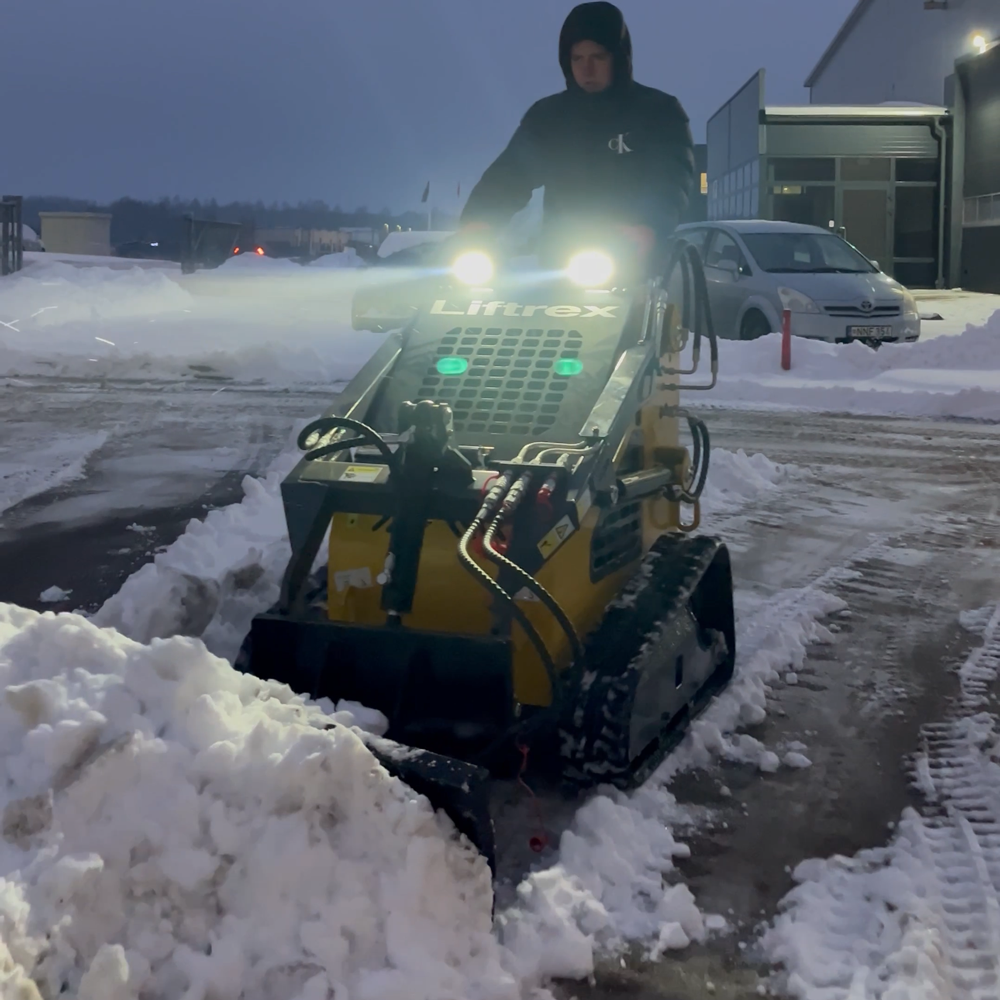
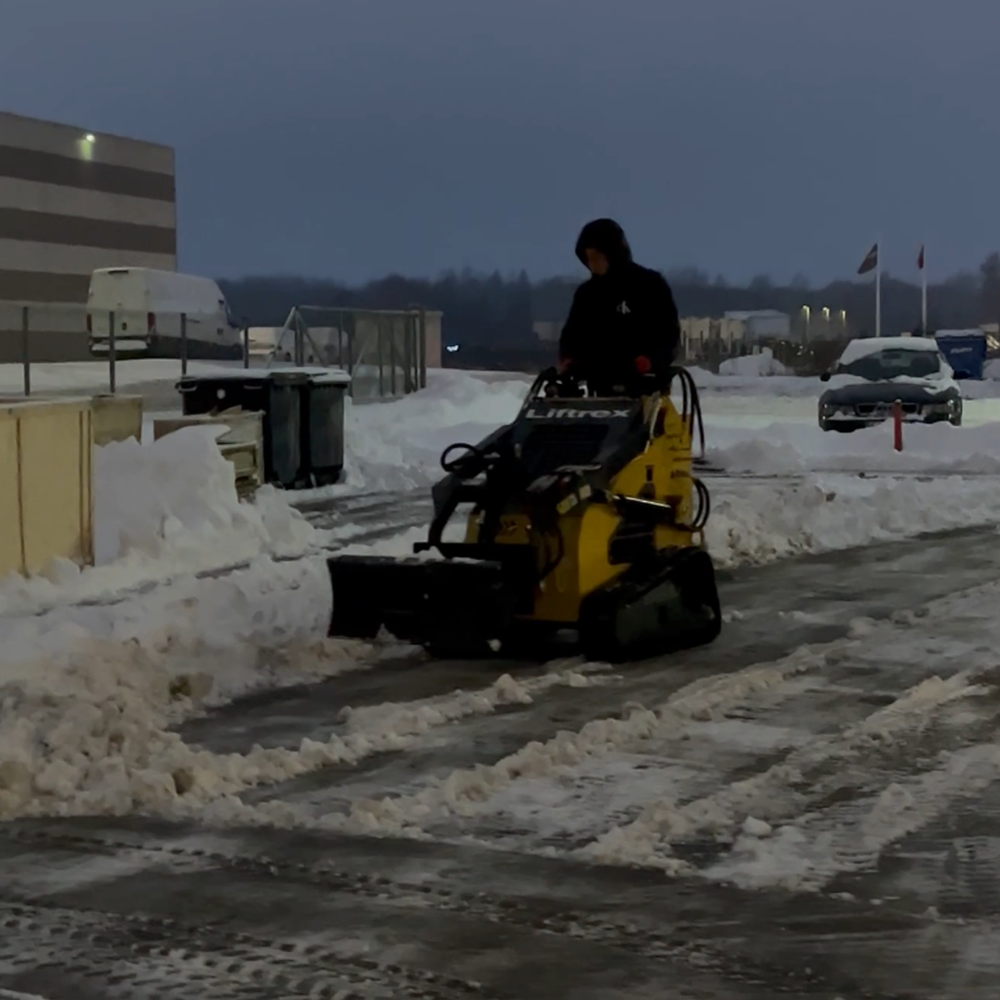
A mini loader shines where volume and speed matter.
Large parking areas, warehouse yards, farms, logistics zones—places where snow isn’t just pushed aside but must be moved.
In these situations, mini loaders allow you to clear areas quickly and maintain movement even in heavy, wet snow.
Narrow access points and areas requiring very precise work near curbs, buildings, or walkways.
In tight spaces, a loader can be too aggressive.
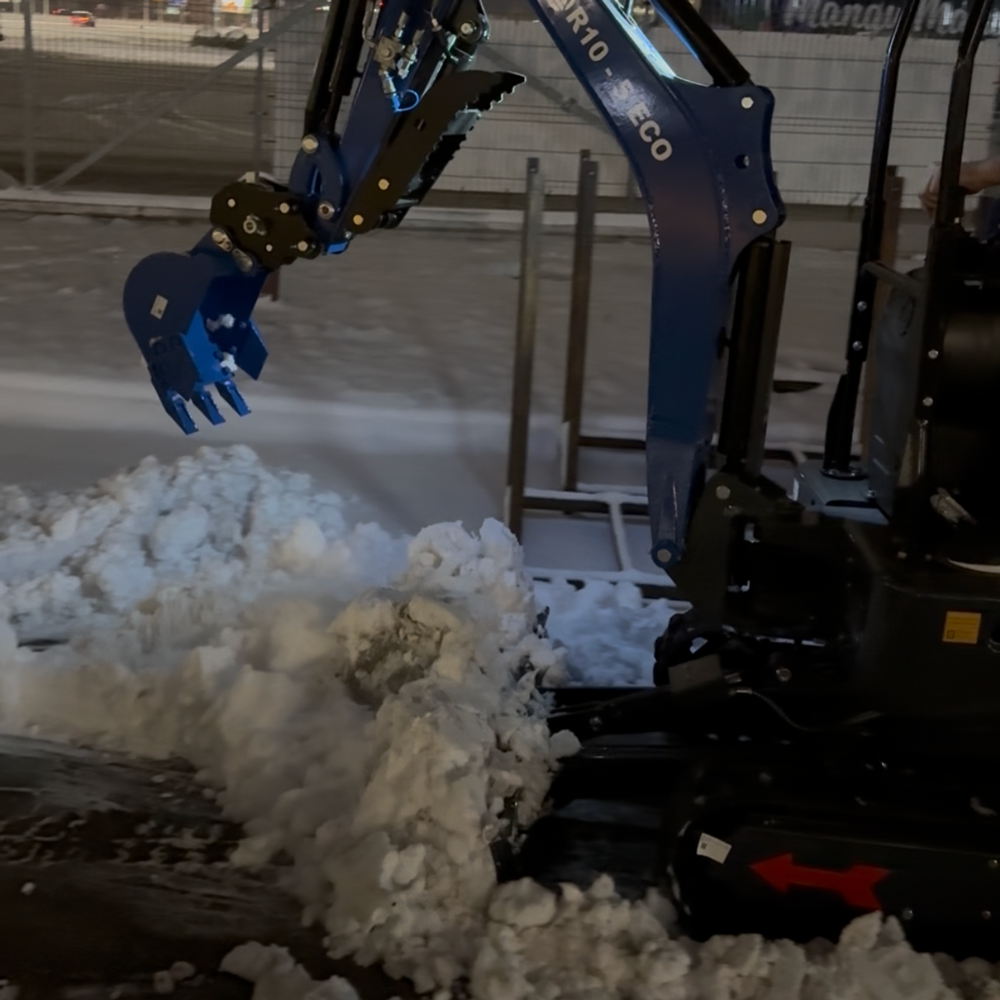
RIPPA mini excavators are often underestimated in winter because they’re seen only as digging machines.
In reality, they perform very well in snow removal where maneuverability and precision matter.
Courtyards with many obstacles, access routes near buildings, private properties, and smaller job sites are places where mini excavators are often more practical than larger machines.
RIPPA isn’t a snow-only solution.
In winter it handles snow, in spring it works with soil, in summer it installs fences and landscaping, and in autumn it prepares sites.
It’s equipment that works year-round—not just for one season.
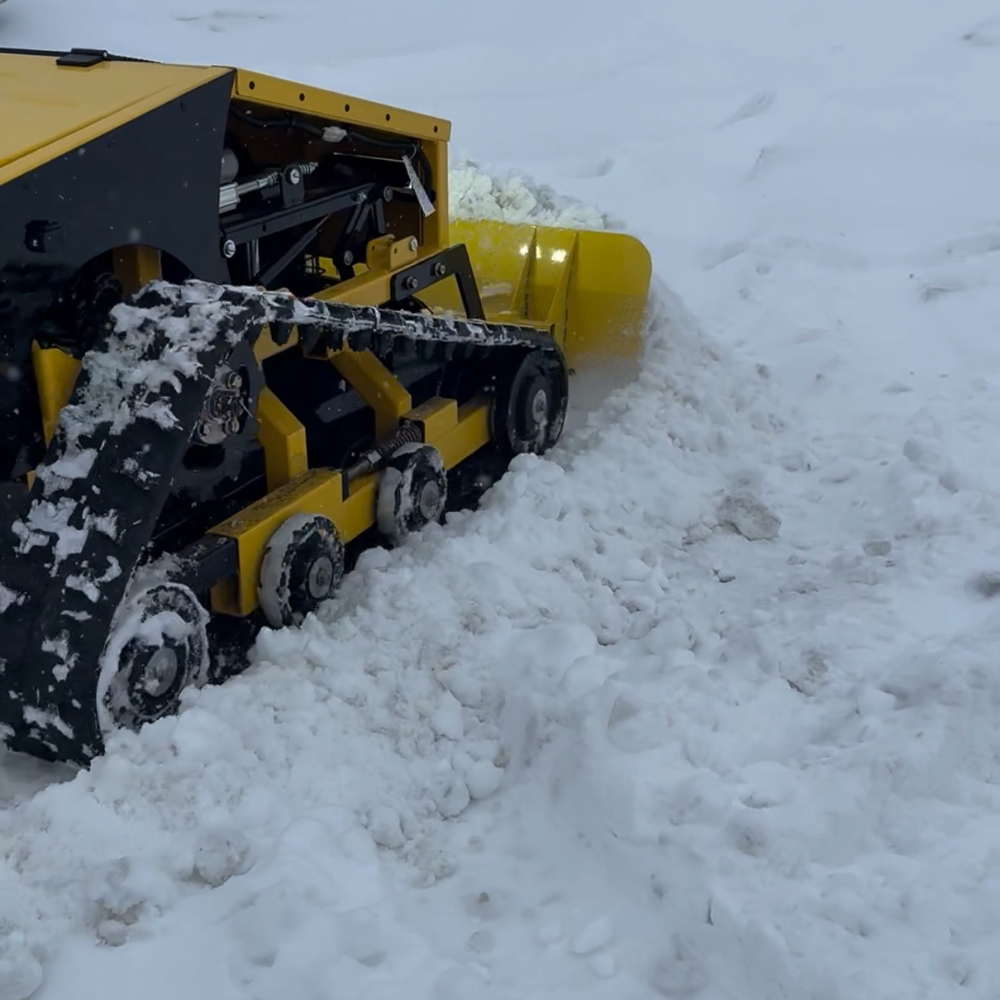
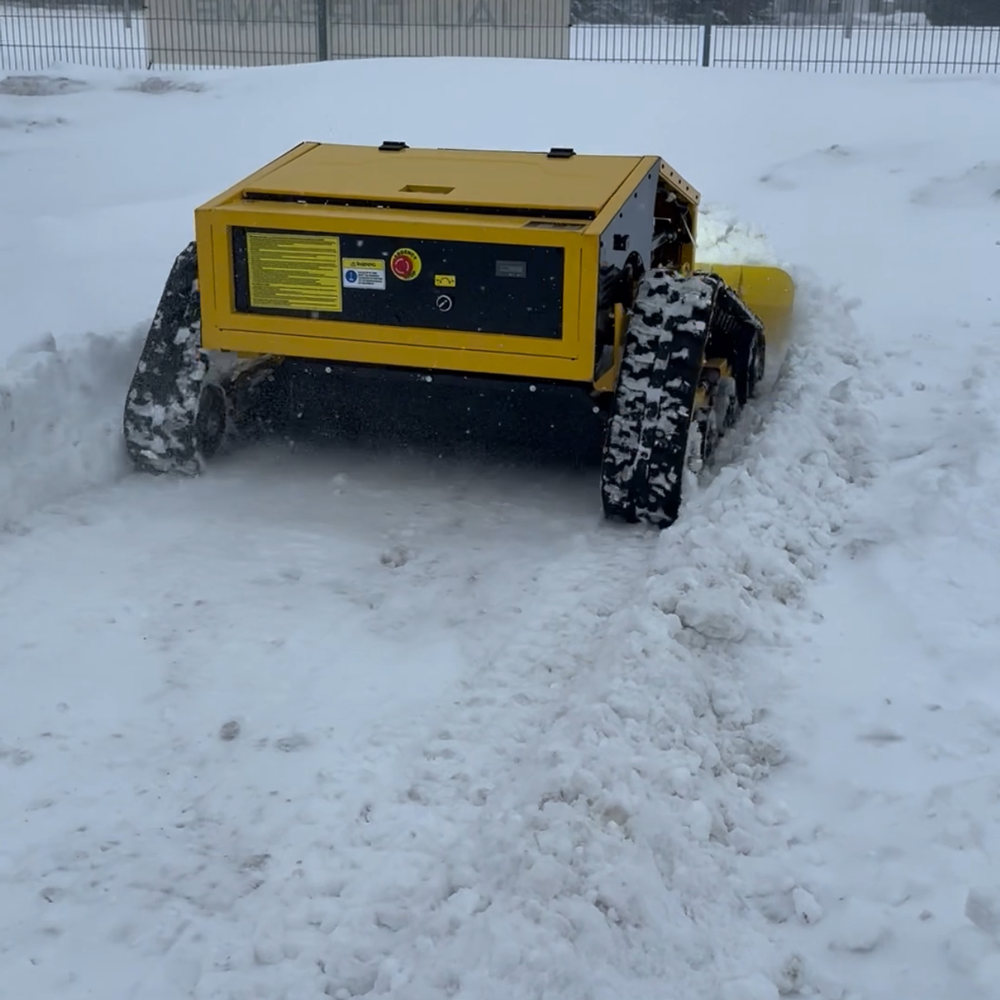
A snow robot works best where snow falls often but in small amounts—around homes or small areas where the goal is maintaining access, not moving large volumes.
Heavy snowfall, wet snow, and situations where fast clearance after a storm is required.
In these cases, robots simply can’t keep up.
Large area → mini loader
Narrow yard with many obstacles → RIPPA mini excavator
Frequent light snow at a home → snow robot
The worst option is trying to solve everything with one tool that doesn’t truly fit any scenario.
The equipment itself is rarely the problem.
Most disappointment comes from choosing the wrong solution for real conditions and actual work requirements.
Snow comes every year. The question isn’t if, but how you prepare for it.
The right equipment keeps movement, pace, and calm—even when weather conditions work against you.
If snow removal becomes a recurring headache, sometimes all it takes is a proper conversation and a clear assessment of your situation.
JEKPO helps select equipment based on real work—not generic descriptions.
📍 Visit our physical store at Ateities g. 2, Dainos (Šiauliai)
📞 Or call +370 628 87 761
Sometimes one conversation can save you the entire winter.