In construction work, track geometry matters more than it seems.
If you often work on soft ground, slopes, or need to calmly “climb” a curb, it’s the undercarriage design that determines whether the machine keeps working or comes to a stop. In daily practice, the choice usually comes down to two types—triangular (delta) and straight tracks. Both move the machine, but their behavior on site differs enough that you feel it not only in your back at the end of the day, but also in your costs.
What’s the difference between triangular and straight tracks?
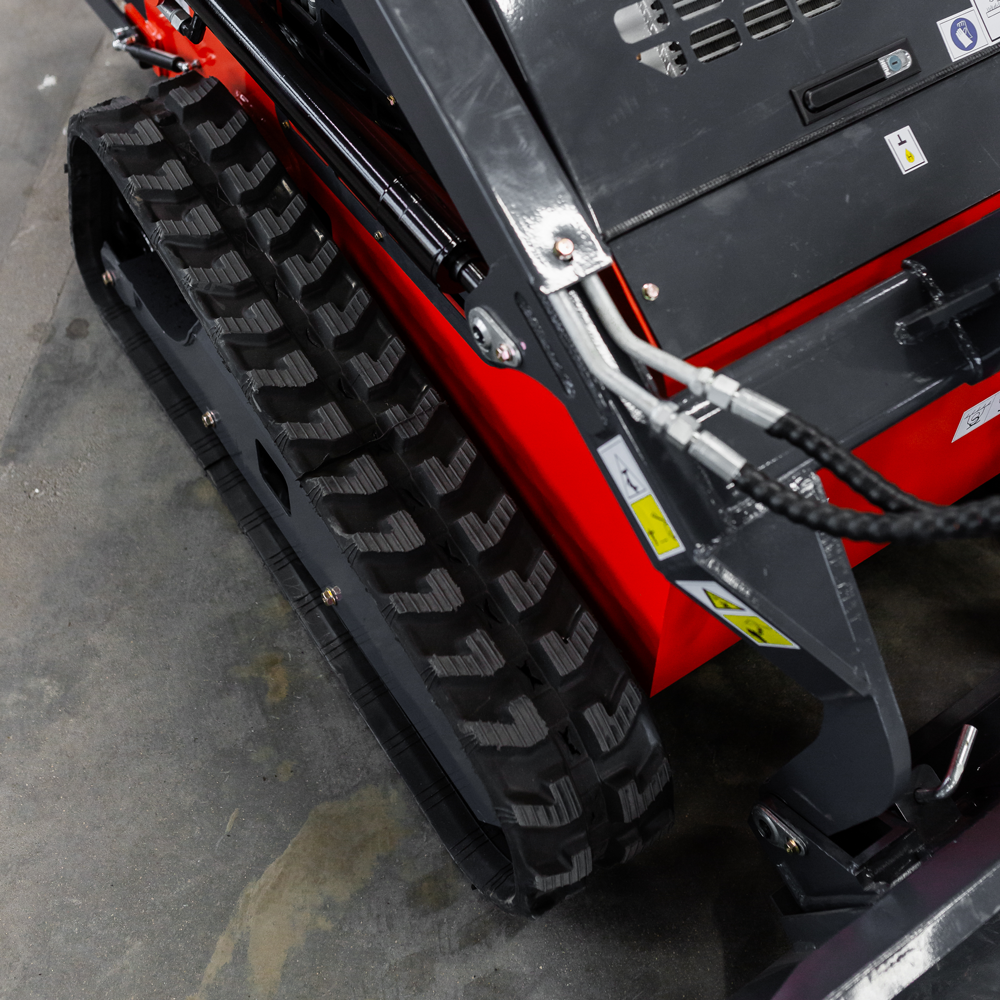
With triangular tracks, the front idler is raised. This gives a better approach angle and a longer ground contact line. The machine “climbs” more easily, distributes weight more evenly, and disturbs the ground less.
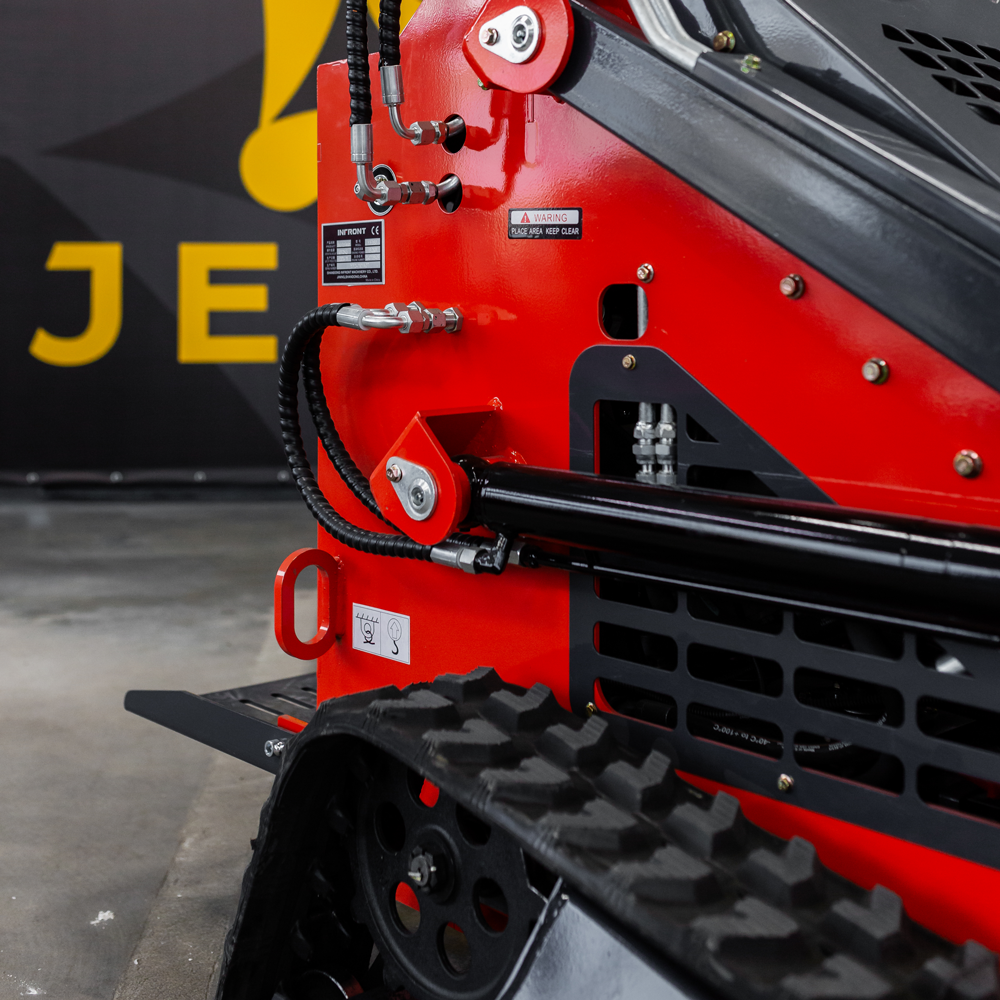
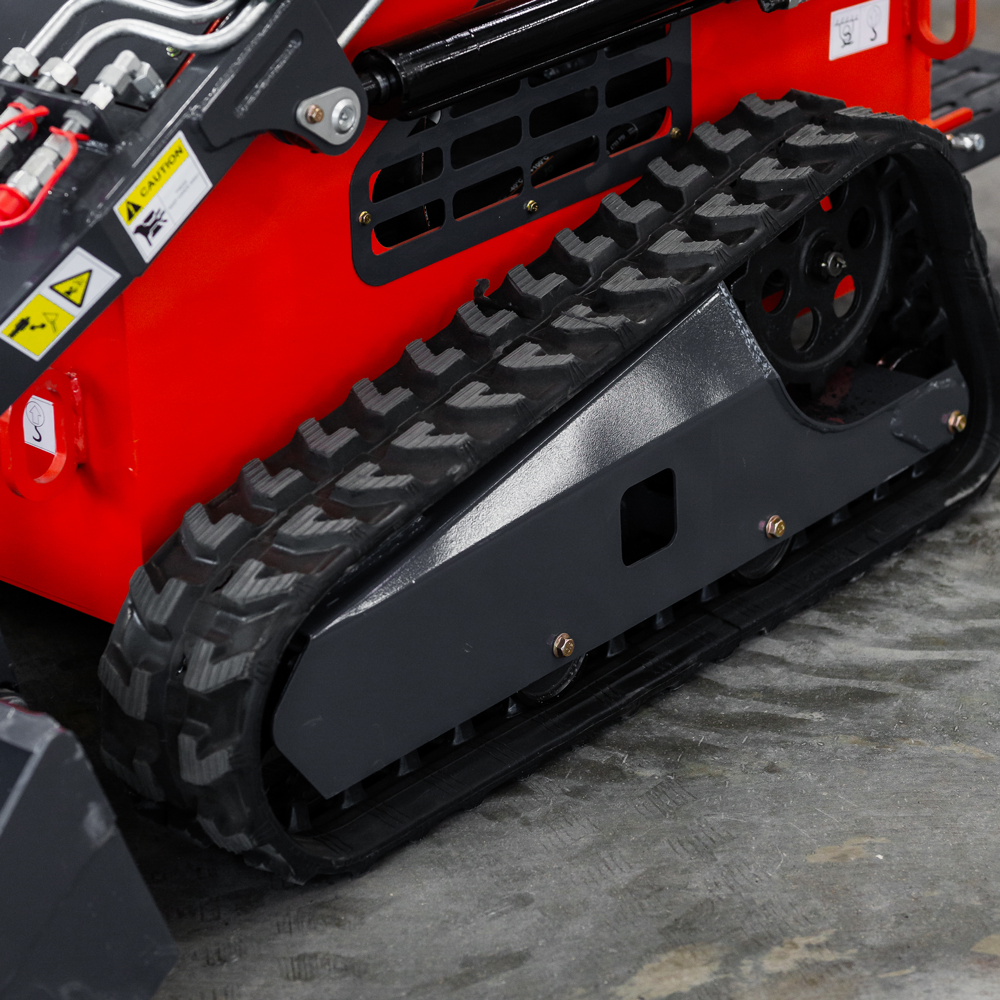
Straight tracks are the classic solution: a flat undercarriage, fewer rollers and components, easier visual inspection, and often lower running costs—especially when most work is done on harder surfaces.
Where triangular tracks really show their strength
Soft clay or waterlogged grass becomes less of a problem because ground pressure is spread more evenly and the machine sinks less. On slopes, triangular tracks feel more stable and rock less over small irregularities. When dealing with thresholds or curbs, the raised front makes a real difference—you don’t get stuck, you hit the undercarriage less, maneuvers are shorter, and work rhythm stays faster.
When straight tracks win with common sense
If most of your day is spent on paving stones, compacted gravel, or smooth access roads, straight tracks are often the more economical choice. Fewer moving parts, simpler maintenance, and more predictable wear all add up. If operators rotate within a team, straight-track tension and condition are also easier to assess without lengthy explanations.
Maintenance is where profit is made—or lost
Clean mud from rollers daily and visually check track tension. The track shouldn’t hang like a rope, but it shouldn’t be tight like a guitar string either. Once a week, inspect the tensioning system and roller wear. Before the season, check tread condition, side lugs, and guides.
Most important: discipline. Avoid aggressive 180° turns—use wider arcs instead. On sensitive surfaces, reduce speed and pressure so you don’t leave “signatures” that later come out of your own margin.
How to choose?
If more than half your routes involve soft ground, slopes, and frequent curbs, triangular tracks pay for themselves within the first few hundred meters. If 70–80% of your work is straight-line travel on hard surfaces, straight tracks save nerves and operating costs.
On mixed sites, don’t be a maximalist. Think about the whole season, not one bad day. The machine should work best where you work most often.
In the end, your daily rhythm decides
If your routine involves tight access points, slopes, and curbs, triangular tracks give you confidence and traction that turn into real progress by the end of the day. If simplicity, clean yards, and straightforward maintenance matter more, straight tracks earn their price without drama.
And if you want to feel the difference not from a description but from behind the controls—visit the JEKPO store at Ateities g. 2, Dainos, Šiauliai. We’ll measure your typical access points, show you both setups in practice, and configure attachments so the machine works from day one instead of waiting its turn.