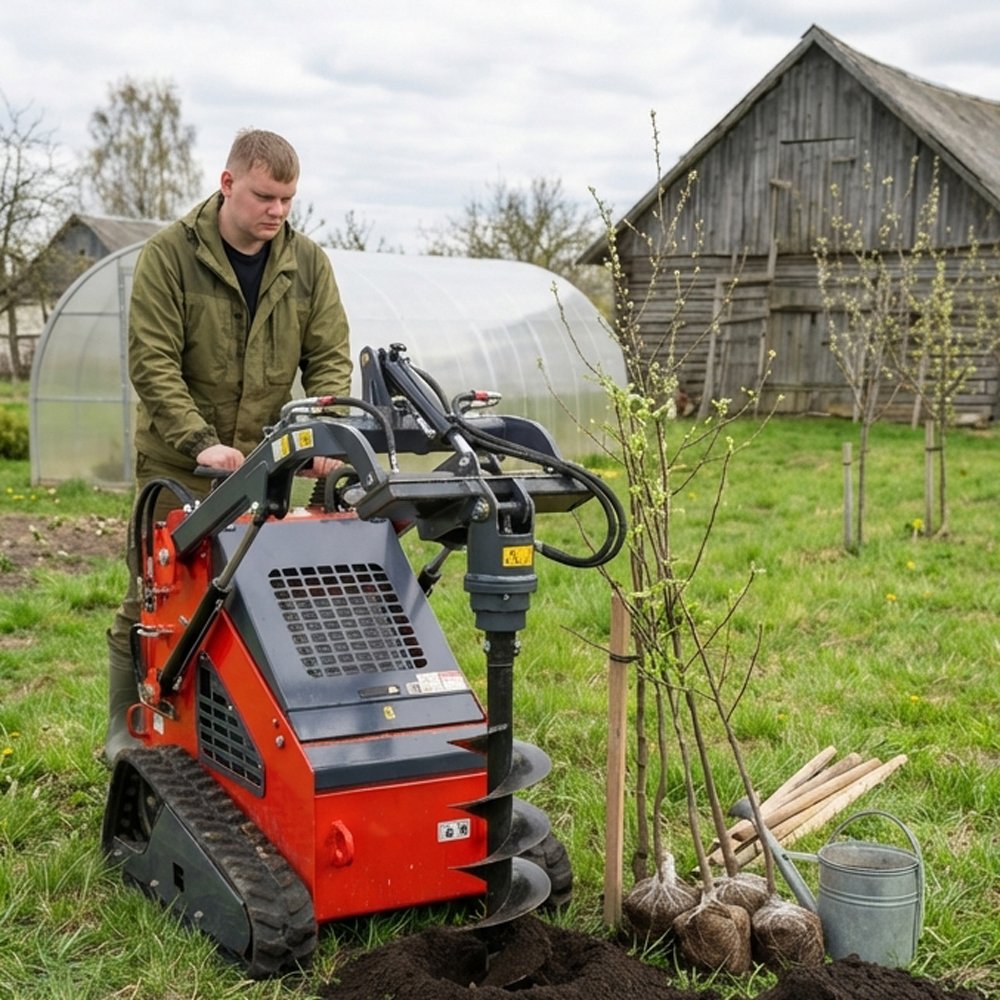
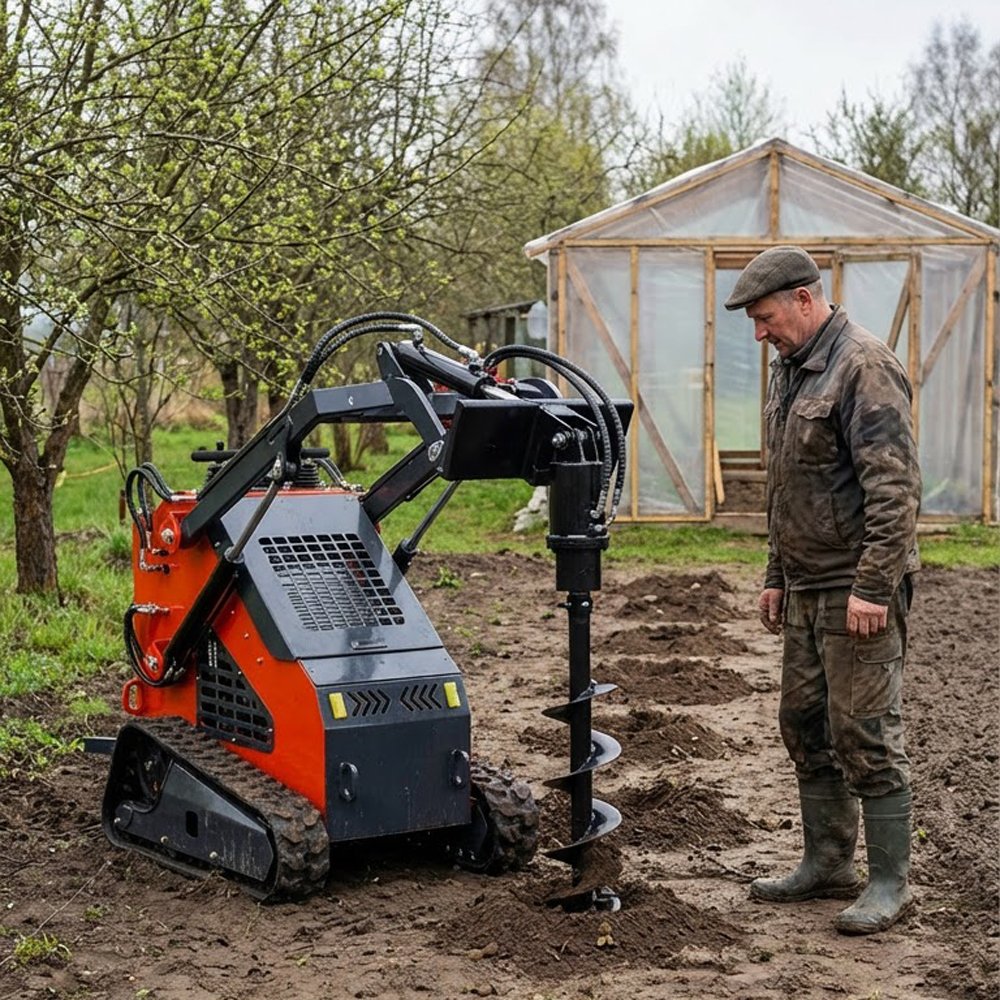
In spring, tree planting and post drilling become some of the most common tasks on farms, estates, and construction sites. Fence installation, landscaping, or light structure setup always begins the same way – precise, deep holes must be drilled into the soil. This raises a practical question for many: is it worth digging manually, or should mechanized equipment be used for tree planting and post drilling?
Manual digging is still common, but it is slow, physically demanding, and difficult when the soil is hard or wet. When dozens of holes are needed, work drags on and productivity drops. Mechanized drilling allows tree planting and post drilling to be completed several times faster, more accurately, and with less physical effort. In spring, what matters is not how many plans you have, but how much work you actually complete.
Why manual digging slows work
Shoveling individual holes is possible, but when tree planting or post drilling is done over a larger area, manual labor becomes a bottleneck. One hole often takes 20–40 minutes, and in hard or clay soil it can take even longer. Maintaining consistent depth is difficult, edges crumble, and holes need corrections. Fatigue sets in after a few hours, slowing the work pace. Digging 30–50 holes manually can take several days. As project scope increases, manual solutions become inefficient.
Hydraulic auger speeds up tree planting and post drilling
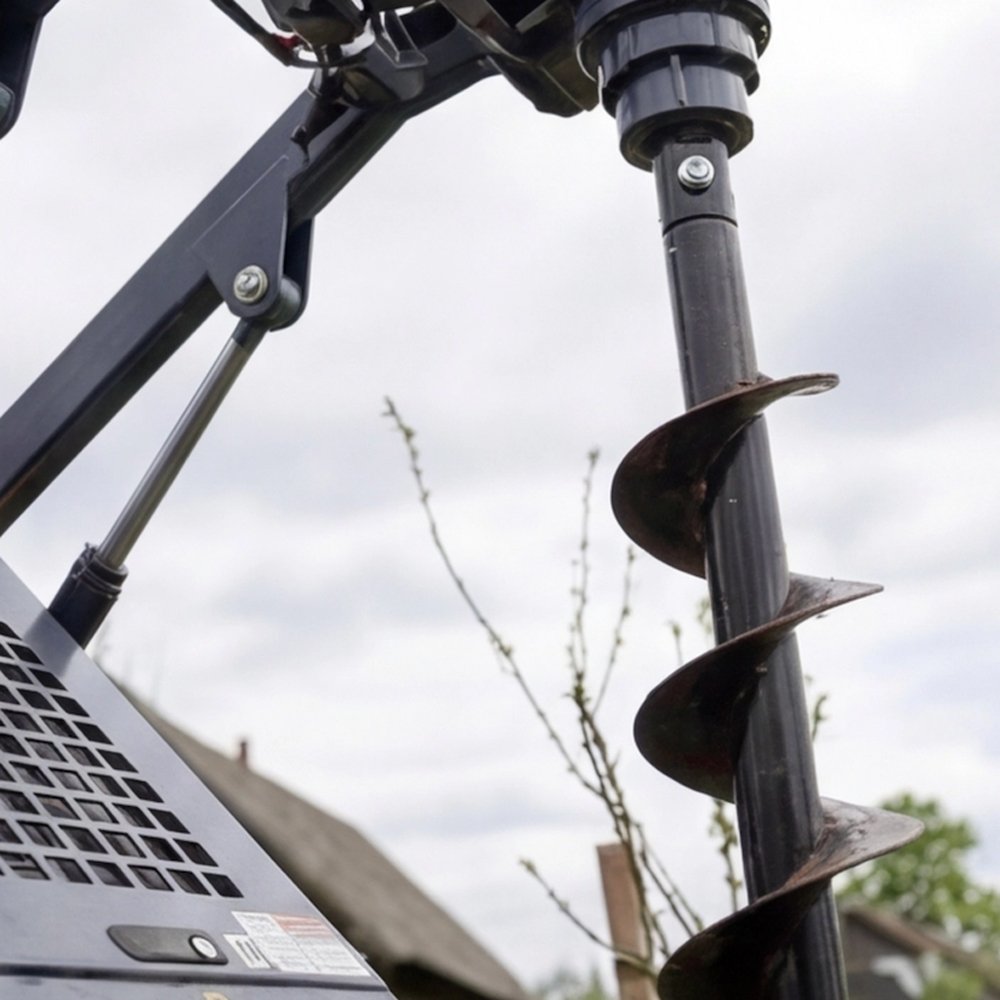
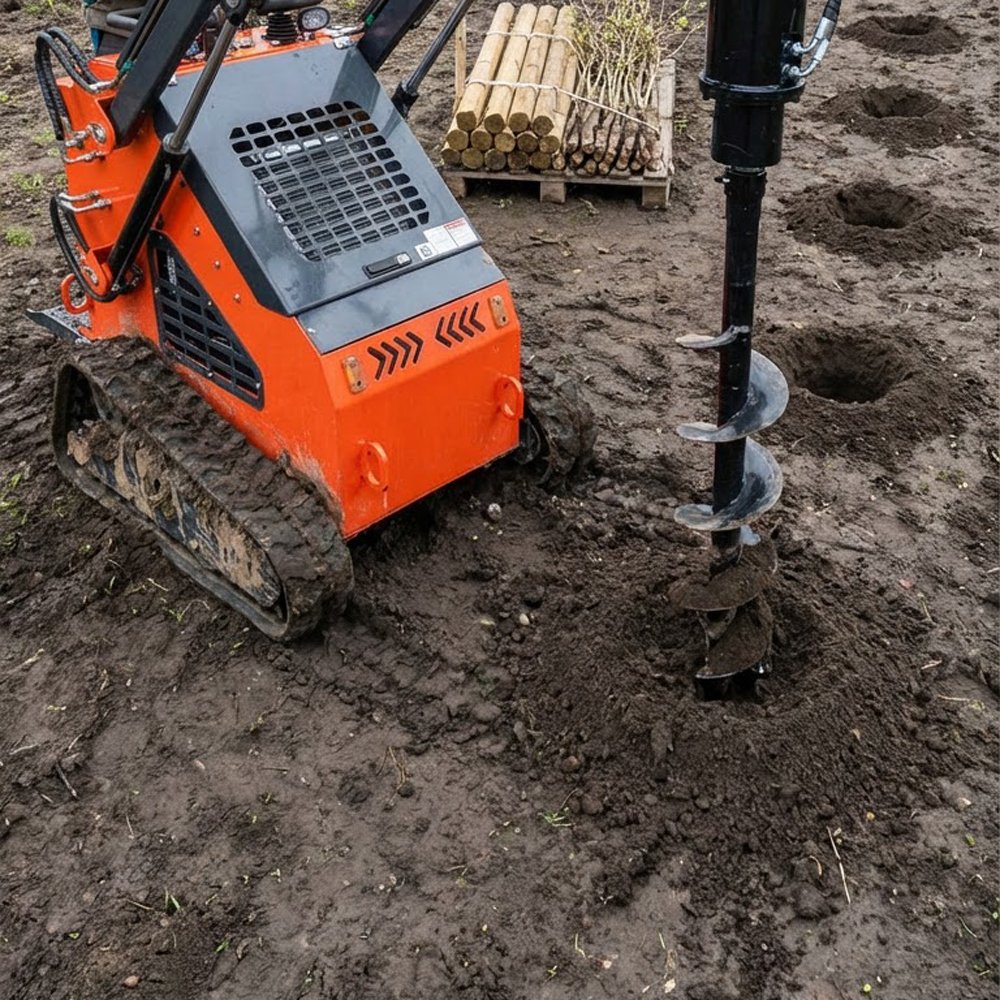
Hydraulic augers are designed for professional hole drilling in various soil types. High torque allows stable operation even in dense soil, and precise control ensures uniform depth and width for each hole. Tree planting and post drilling become easier because holes are drilled quickly and without extra adjustments. The auger mounts on a mini loader, allowing one machine to handle multiple tasks on-site.
Choosing the right auger diameter
Efficiency depends on selecting the proper auger diameter. The closer it matches the task, the less additional shaping is needed:
-
200 mm and 250 mm – small trees, light fence posts, simple landscaping
-
300 mm and 350 mm – fence posts, medium-sized planting on farms and estates
-
400 mm and 450 mm – larger trees, sturdy fence foundations, landscaping projects requiring wider holes
-
500 mm and 600 mm – structural foundations and complex professional projects
Reliable hydraulic drive ensures stable operation
Tree planting and post drilling often occur in challenging soil – clay, wet ground, or areas with many roots. In such conditions, a reliable hydraulic drive is crucial. It maintains steady hydraulic flow and torque, ensuring smooth drilling without jerks or unnecessary load on the equipment. Durable construction allows intensive work all day, reduces wear, and prolongs service life.
Time savings with mechanized drilling
The difference between manual and mechanized work is clear on larger projects. Digging 50 holes manually can take 2–3 days; using a hydraulic auger, the same quantity is prepared in just a few hours. This allows more work per day, less physical strain, and faster transition to other project stages. Over the season, tens of work hours are saved. Mechanized tree planting and post drilling enables faster, more efficient work.
Who benefits most
Hydraulic augers are most useful for farmers, estate owners, landscapers, fence installers, and construction contractors who need speed and precision. They are ideal for those who want to work independently, reduce physical effort, and avoid relying on hired crews.
Finding the right solution for your equipment
If you plan tree planting or post drilling and want faster results, choose equipment that matches your project scale. The JEKPO team helps select hydraulic augers, auger bits, and hydraulic systems for your machinery and planned tasks.
JEKPO
Ateities g. 2, Dainos, Šiauliai
+370 628 87 761
www.jekpo.com