Plate Compactor or Roller: When Does a Plate Start Limiting Work on Site?
Plate compactor or roller is a question that appears when projects grow and work pace becomes more important than simply achieving compaction.
You compact a driveway or pathway, pass over it several times, yet some areas still feel soft. You return again. Half the day is gone and the completed area is small. Work is happening, but productivity is too low.
A plate compactor performs its function. However, on larger surfaces the limits of its method become visible.
How a Plate Compactor Actually Works
A plate compactor operates using concentrated vibration within a narrow working strip. To achieve uniform ground stability, multiple passes are required.
The wider or longer the surface, the more time is spent returning to the same areas.
On small surfaces this is logical. Narrow paths, corners and local corrections are handled efficiently. On longer driveways or larger yards, however, the number of passes increases and daily output slows down.
According to European construction equipment industry recommendations, uniform pressure distribution over larger areas is a critical factor for structural stability.
When a Plate Compactor Starts Limiting Productivity
Limitations appear when the area exceeds 100 square metres, when the base must support vehicle or machinery loads and when such projects are repeated regularly.
In these situations, more passes are required, working hours increase and overall productivity decreases.
If 20 to 30 percent less area is completed per day, the difference becomes significant over time.
The question plate compactor or roller is therefore not about price. It is about daily performance and efficiency.
How a Roller Differs Structurally
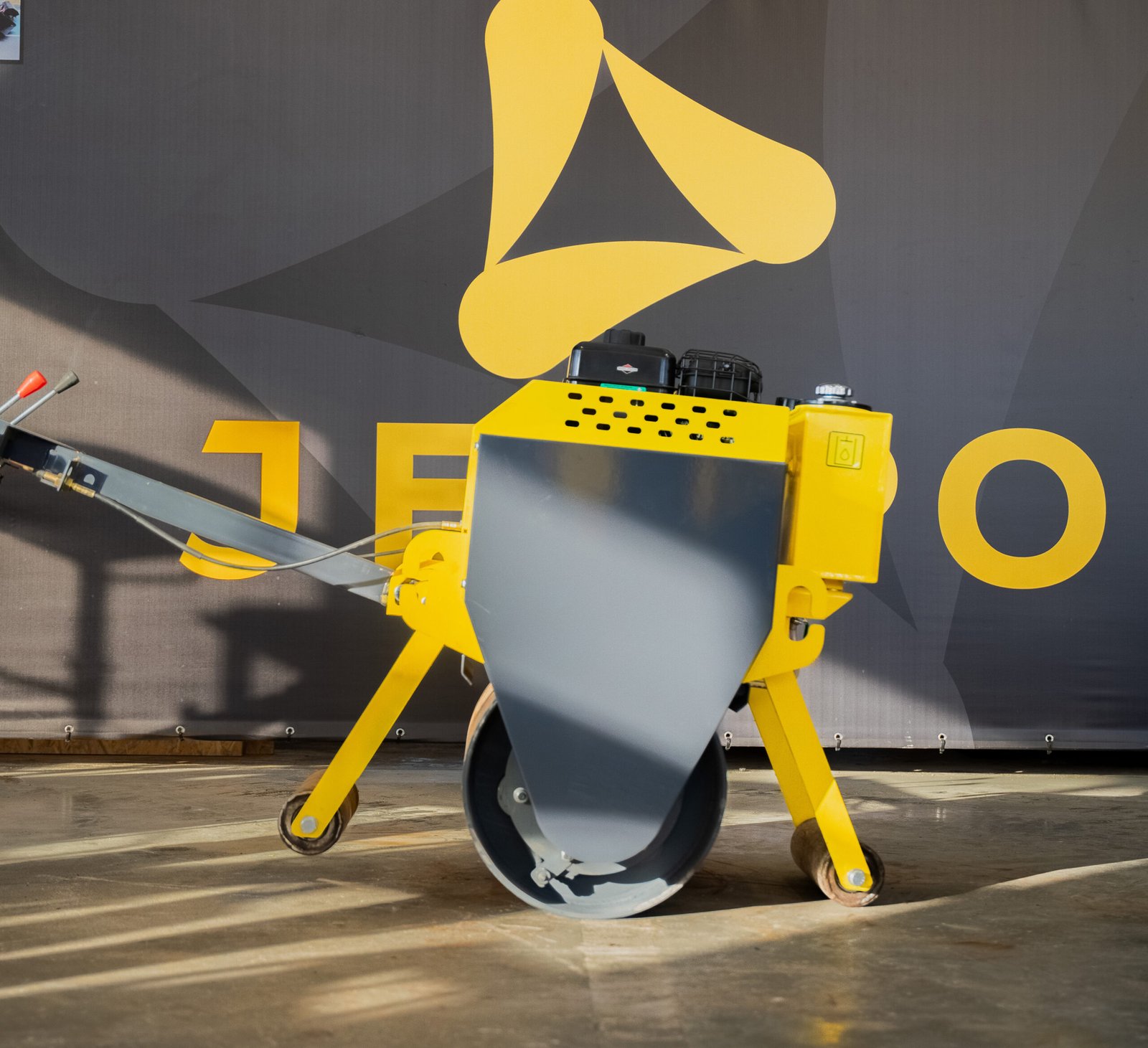
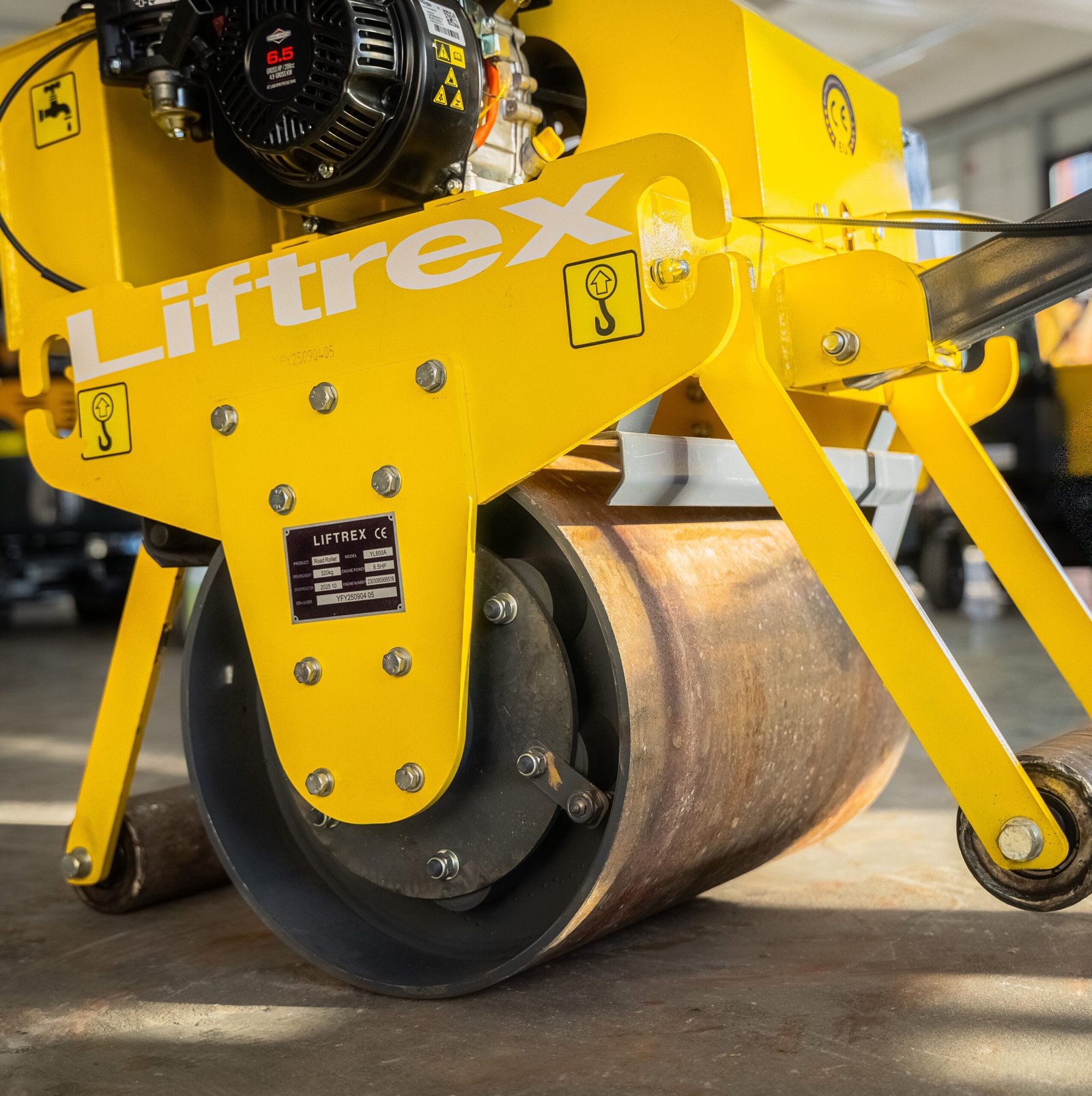
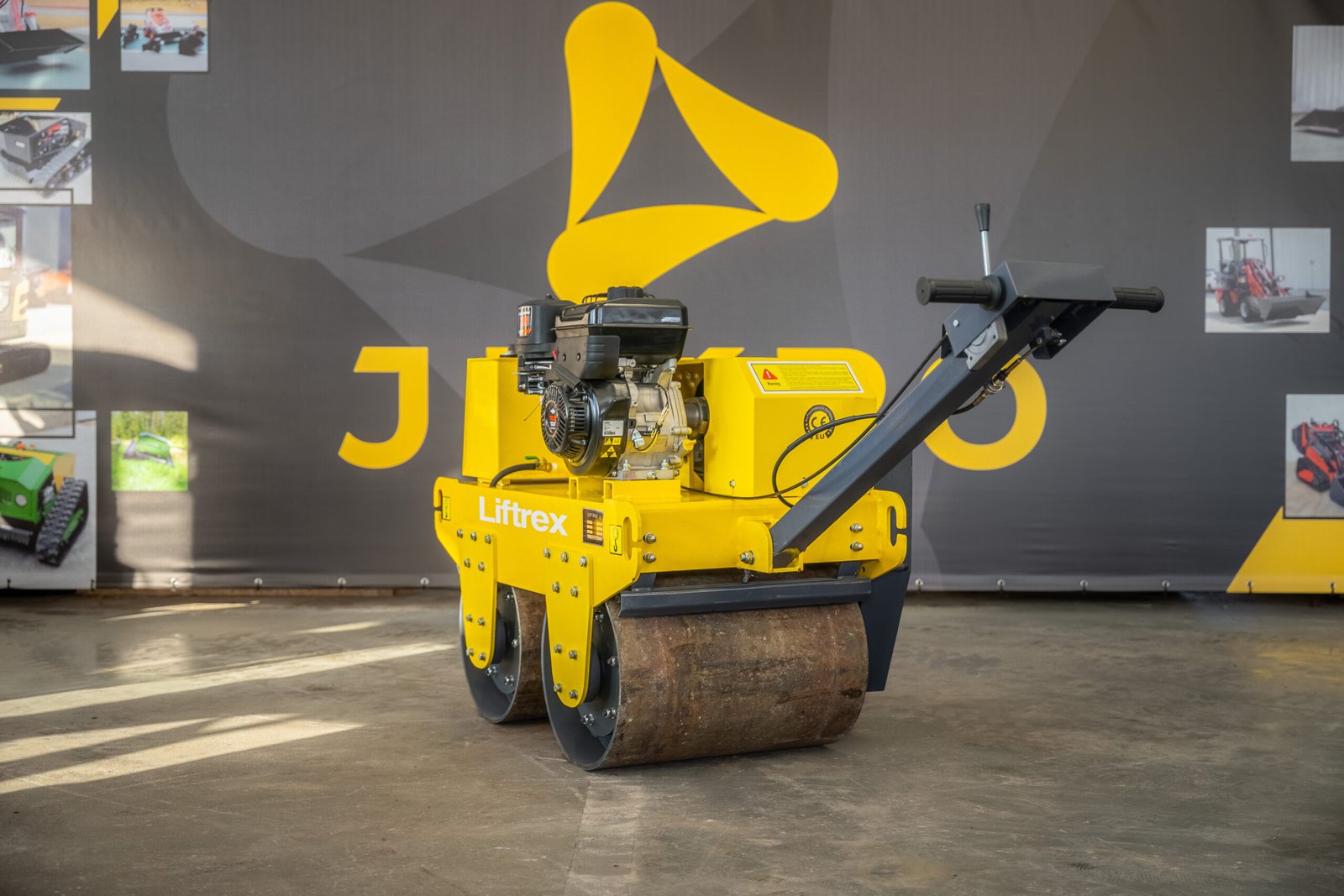
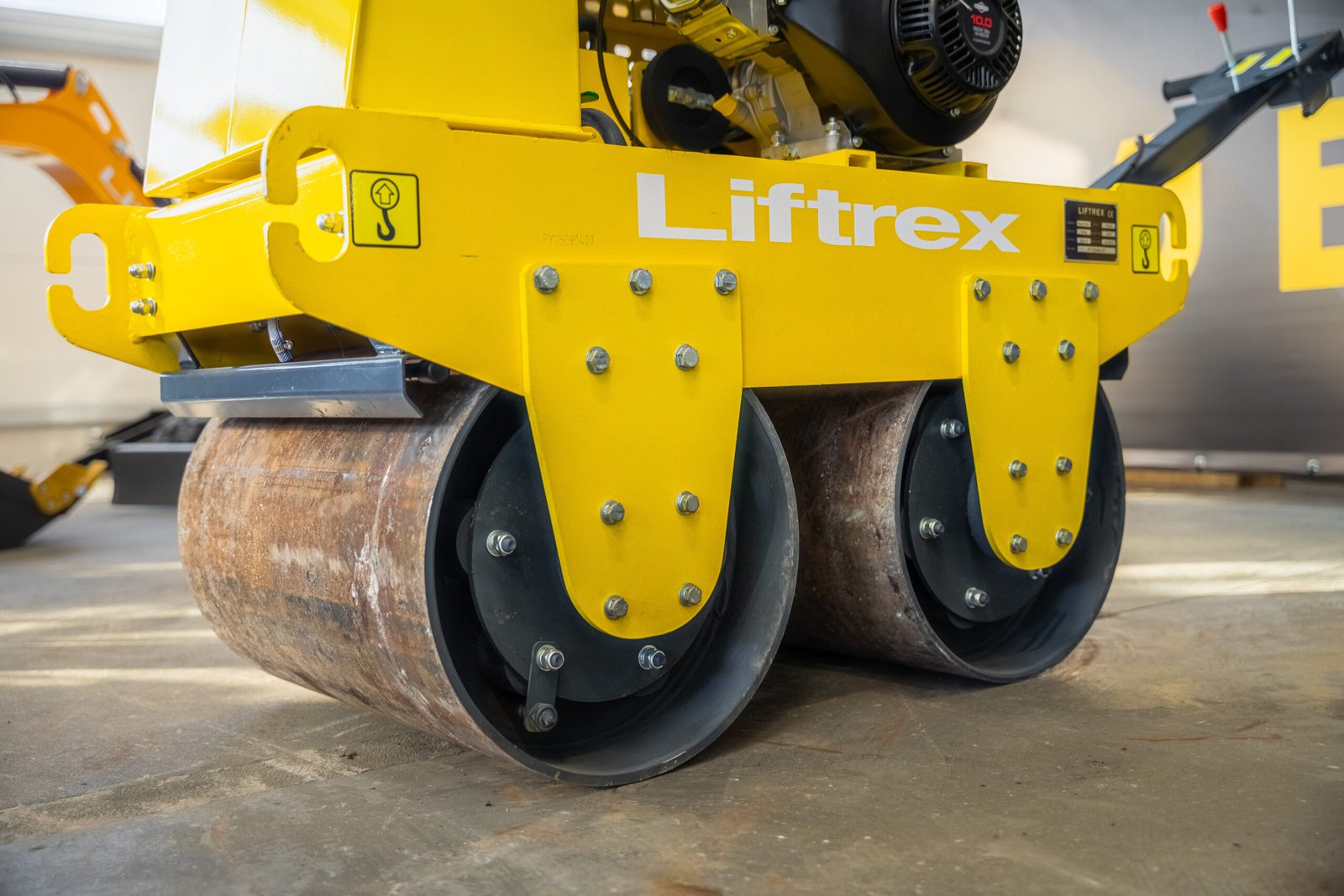
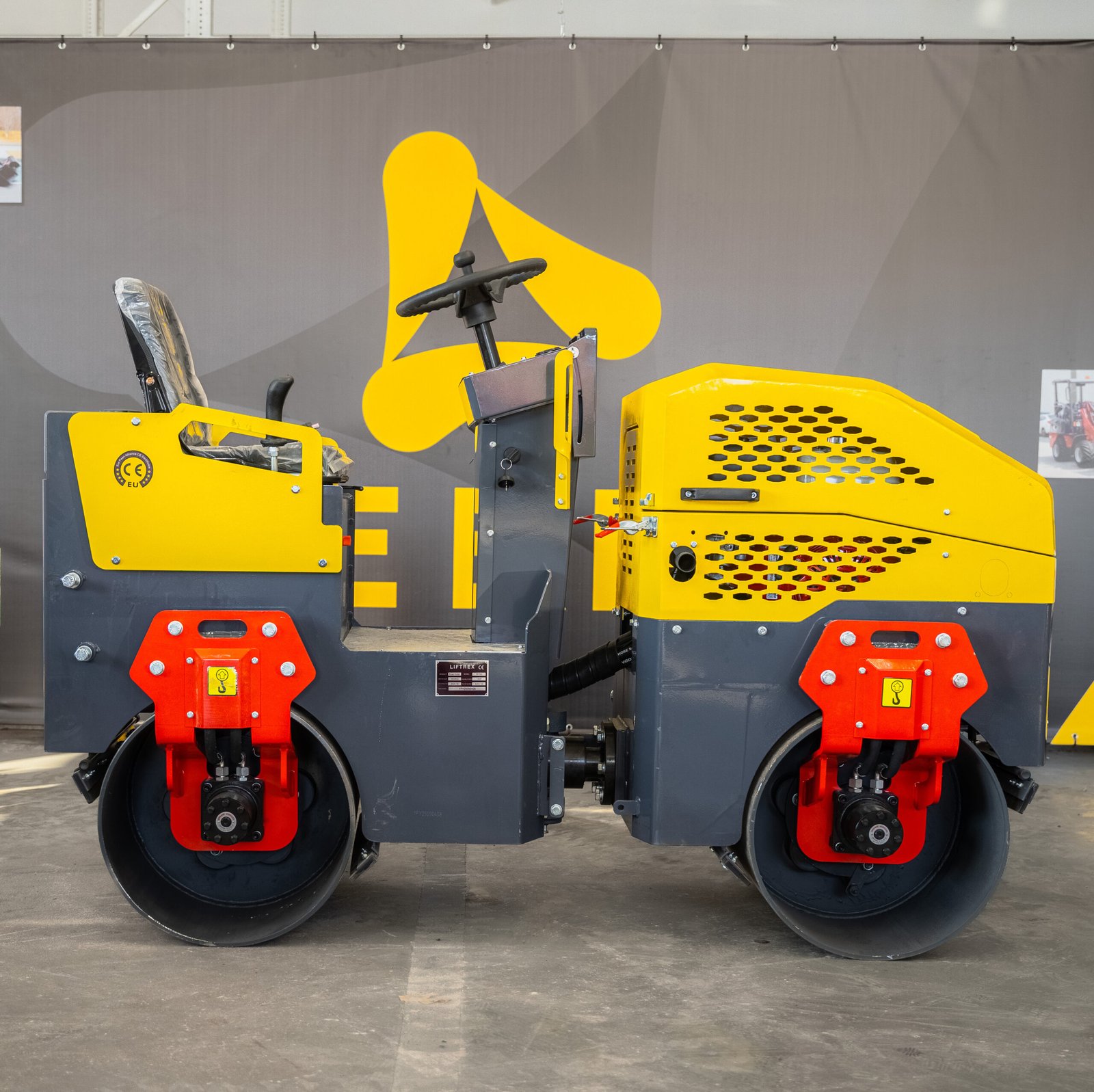
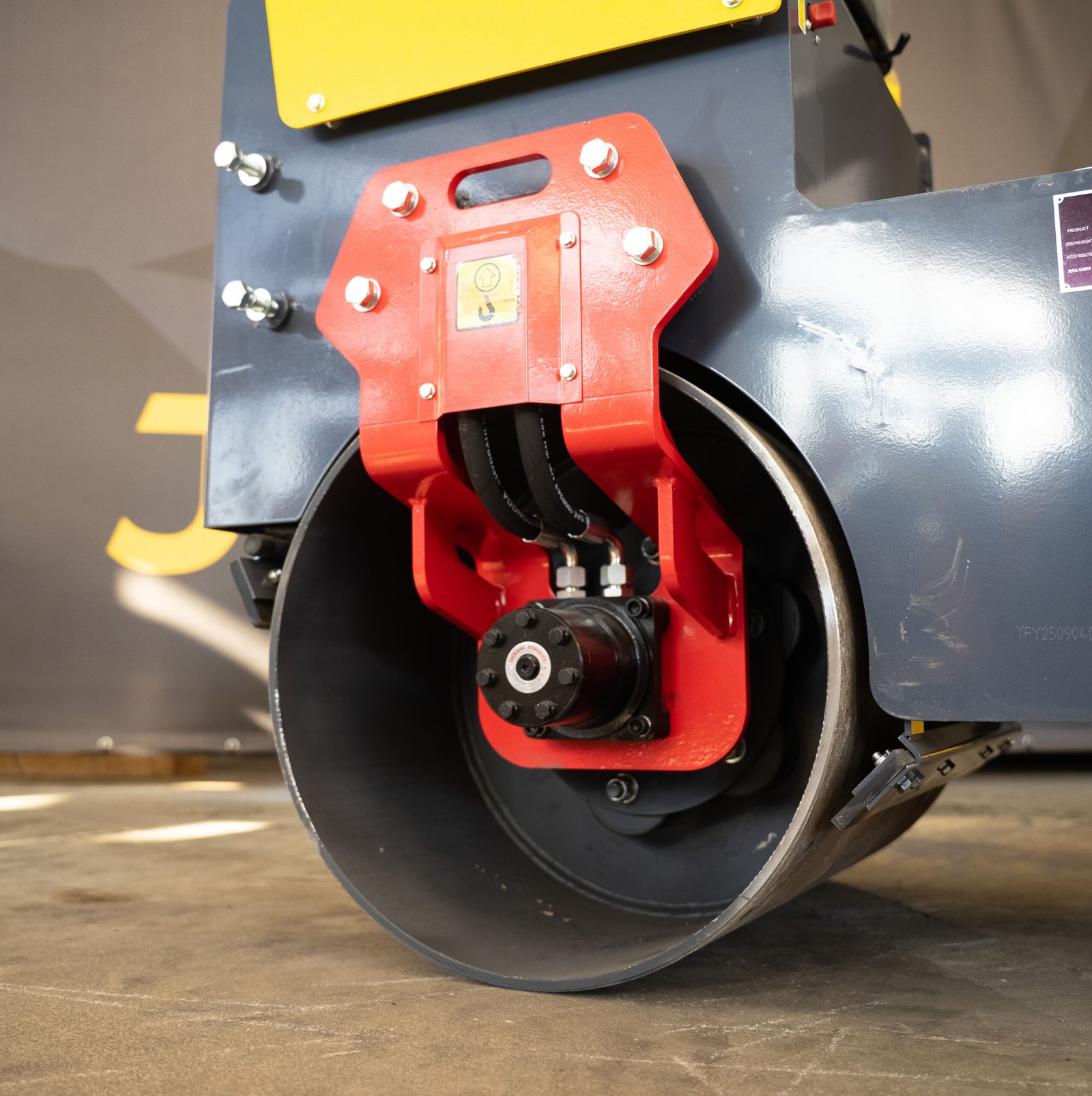
A roller works differently. Its weight is distributed across the full drum width, creating uniform pressure across the entire working zone.
Compaction becomes consistent. Fewer passes are required. There is less need to return to previously compacted areas. Results are predictable.
This reduces dependence on operator technique and increases efficiency on larger surfaces.
Plate Compactor or Roller for the Season
A roller becomes a rational choice when working on areas larger than 100 square metres, when such projects occur weekly and when seasonal workload increases.
Within the JEKPO range, LIFTREX 600A, 700A and 700S models allow selection according to real project scale, from private yards to daily commercial use.
All compaction solutions can be viewed here:
/category/attachmentshttps://jekpo.com/en/k/loader-attachments/
If compaction is combined with excavation or ground shaping, it is worth evaluating the full equipment setup on site:
/category/mini-excavators
/category/mini-loaders
When the entire workflow is structured correctly, work pace remains stable throughout the day.
A Practical Decision for the Season
A plate compactor has its place in smaller projects. However, as project scale increases, a roller becomes the rational solution, enabling more work to be completed within the same working day.
If you are unsure whether your current equipment matches this season’s workload, it is worth assessing it now before peak demand begins.
JEKPO
Ateities g. 2, Dainos, Šiauliai
+370 628 87 761
jekpo.com