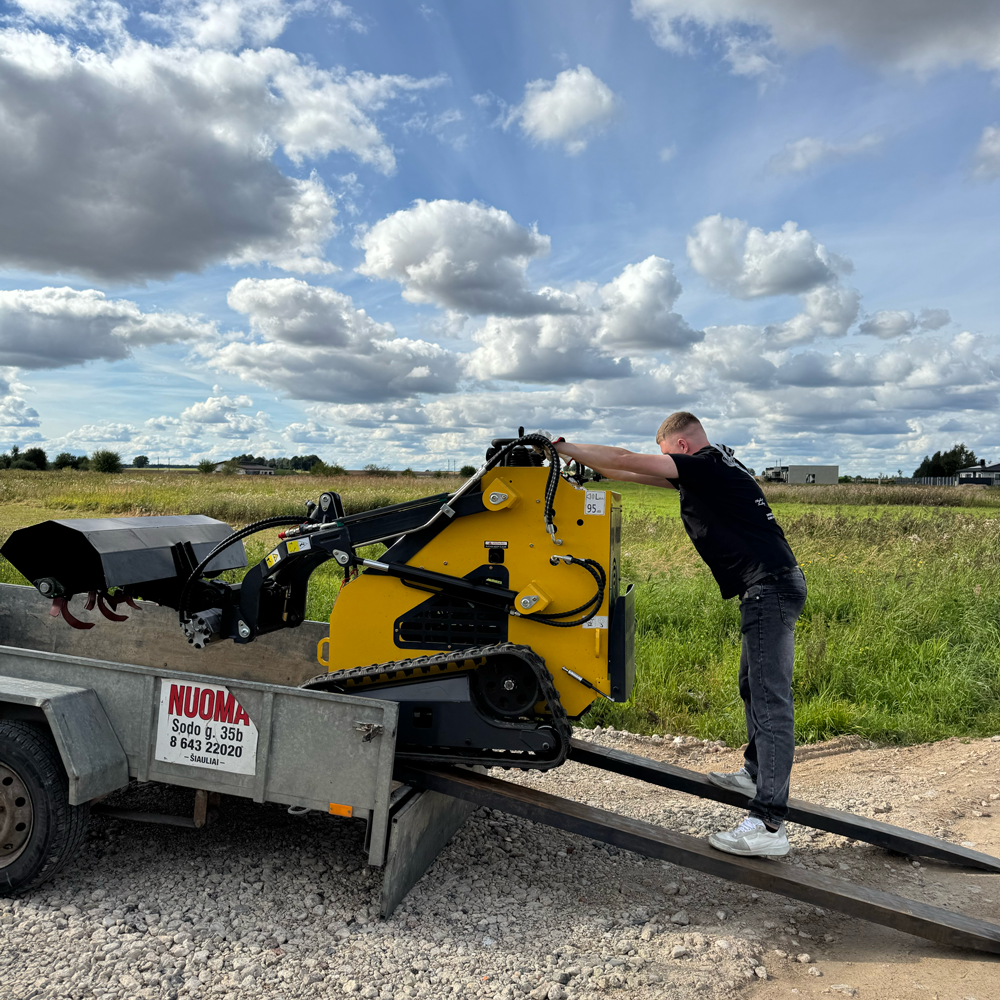
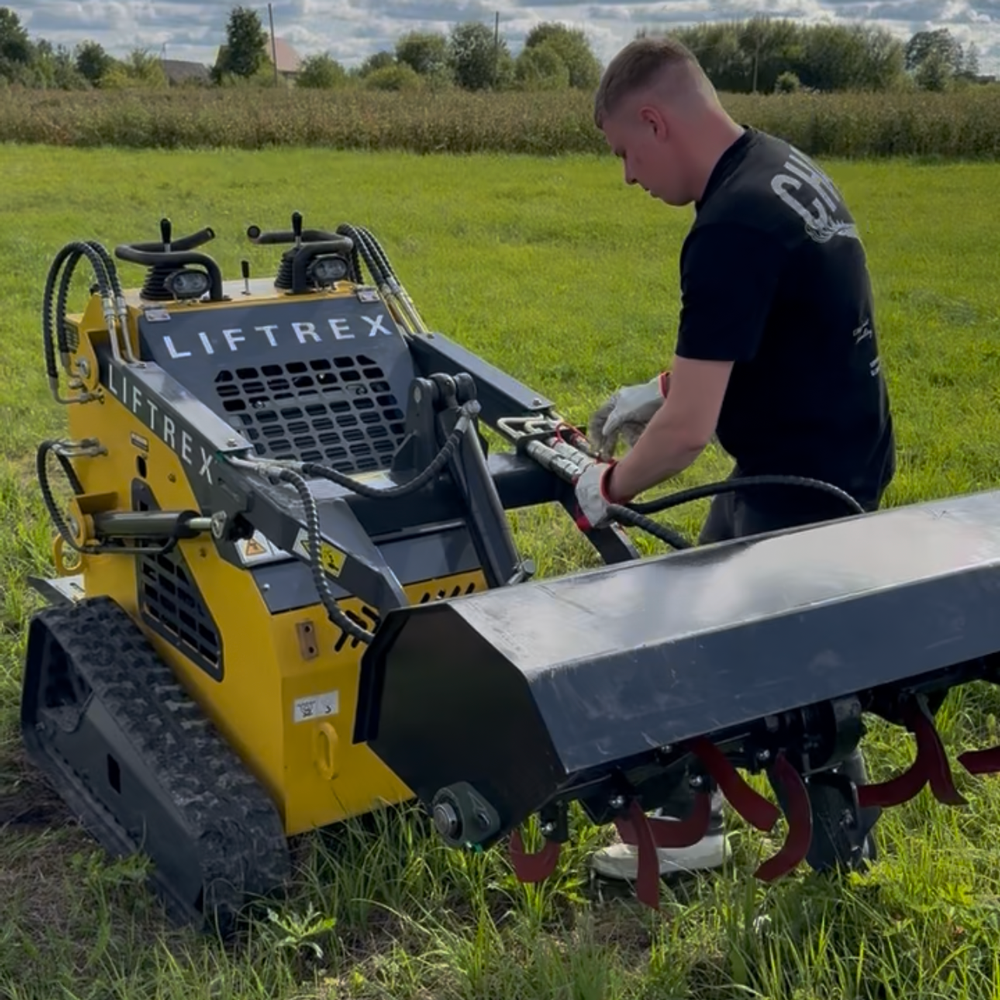
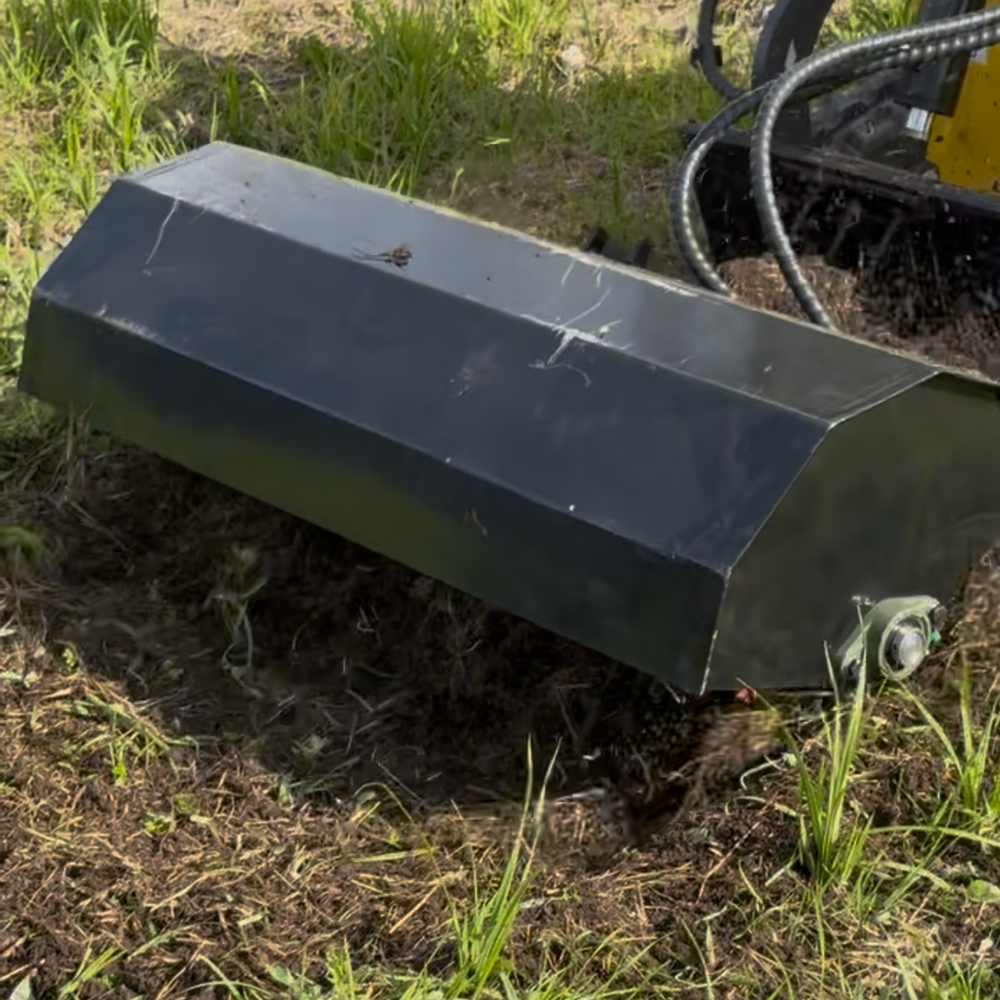
Loader-Mounted Soil Tiller: When It Actually Pays Off and What You Need to Know
A loader-mounted soil tiller becomes relevant the moment time starts slipping on site. When preparing a single area takes half a day and still requires rework, the issue is no longer effort — it’s the process.
With this JEKPO tiller, the workflow changes in a very practical way: the same area can be prepared in just a few hours, allowing you to move forward immediately without revisiting the job.
Where This Soil Tiller Delivers the Biggest Impact
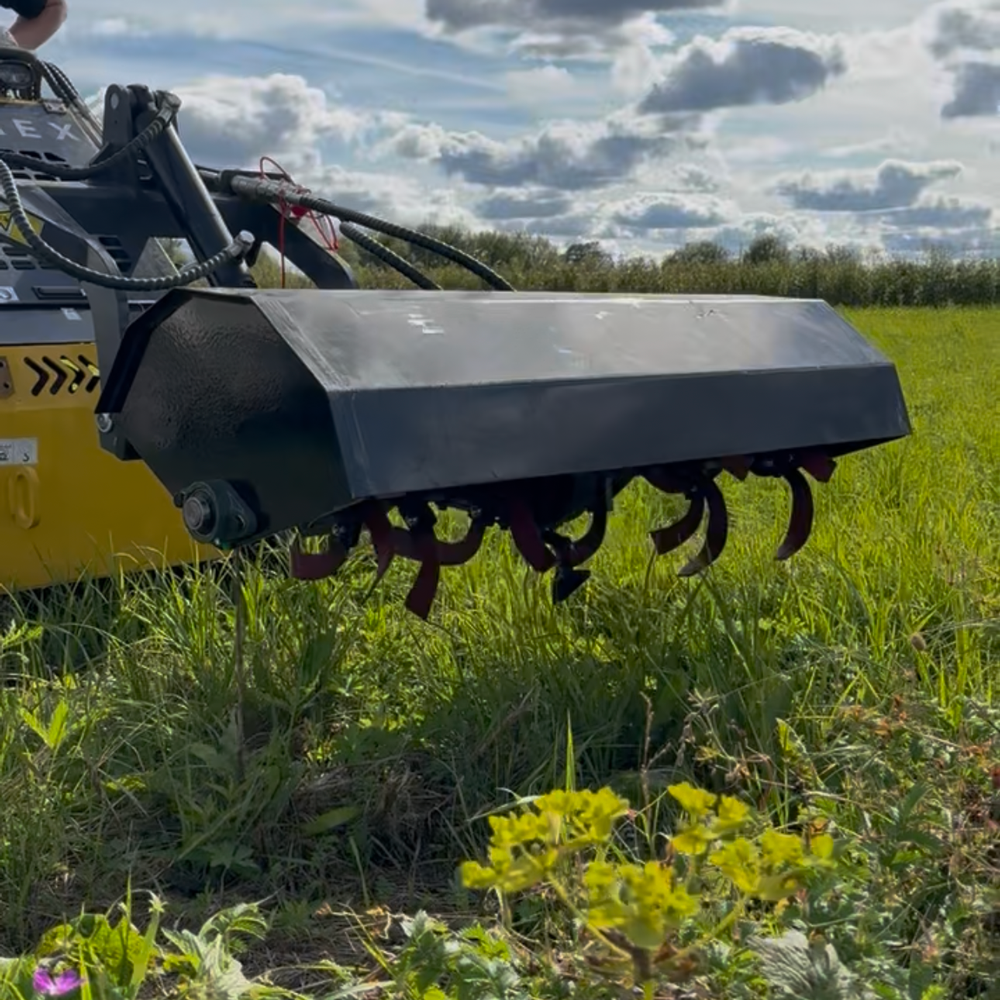
A 1000 mm working width and up to 150 mm working depth allow you to work beyond the surface. This means the soil is not just loosened — it is fully reprocessed.
The biggest gains appear when:
- preparing land after construction, where soil is compacted
- creating a base for lawns that require uniform leveling
- preparing sub-base for paving, where stability is critical
- restoring surfaces after excavation work
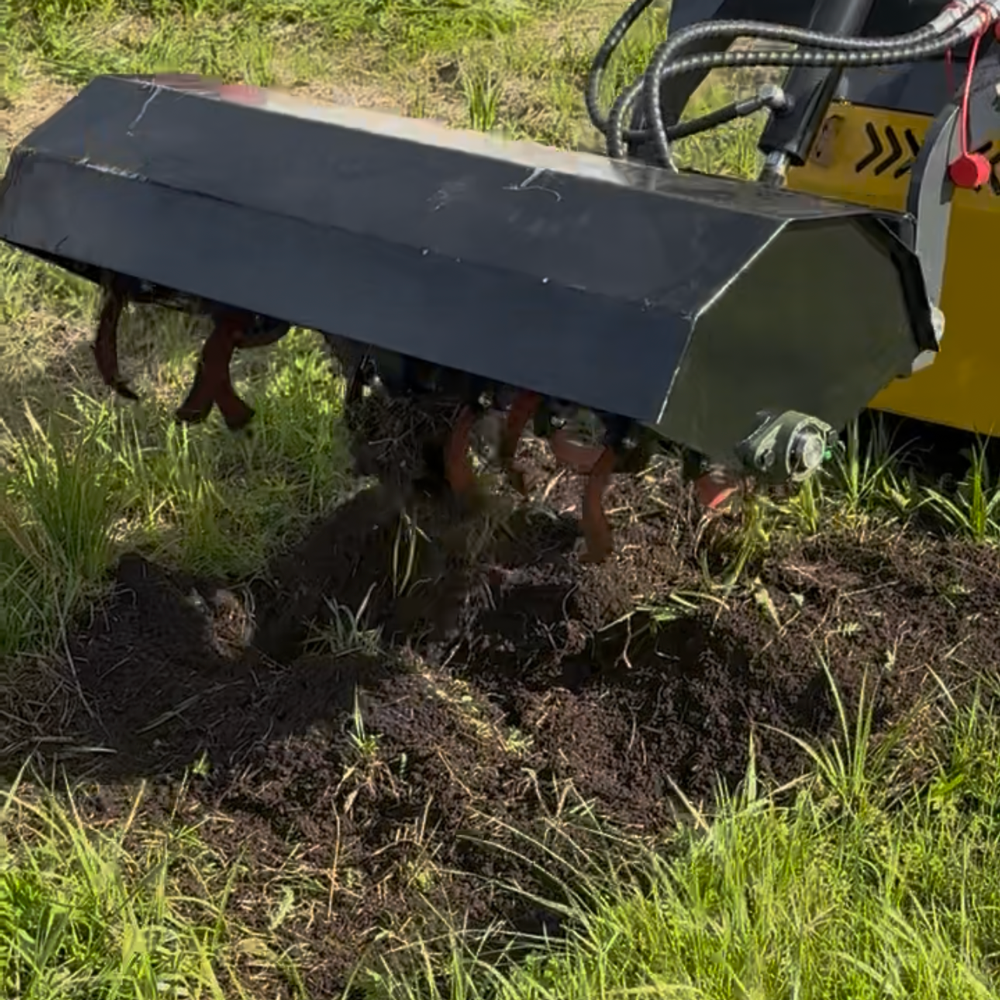
The 38 blades do the core work here — they crush and mix the soil simultaneously, resulting in a uniform surface without clumps or uneven areas.
Why Working Width and Depth Matter
A one-meter working width means you cover a large area in a single pass. Fewer passes directly translate into less time spent.
A working depth of up to 150 mm allows you to go beyond surface-level treatment. This is essential when you need to:
- break up compacted soil
- prepare a solid base for structures
- achieve consistent soil structure
In these cases, shallow tilling is not enough — full soil processing is required.
Blades: Where Real Quality Comes From
The 38 tiller blades ensure dense and even soil processing. This is not just moving soil around — it is proper crushing and mixing.
The result is immediately visible: a smooth, even surface ready for the next stage. Fewer imperfections mean less rework and more time saved.
When the KR38 Loader Is Enough
When working with:
- yards
- homesteads
- medium-sized plots
- light to medium soil conditions
The KR38 with triple hydraulics fully utilizes the capabilities of this tiller. The operation remains stable, smooth, and does not overload the machine.
When It Makes Sense to Consider a More Powerful Setup
As project size and workload increase, equipment load rises accordingly.
Heavy clay, compacted construction soil, or continuous all-day operation require more power. In these situations, it’s worth evaluating not just the attachment, but the entire setup.
JEKPO simplifies this — based on your actual workload, both the attachment and the right loader are selected to function as a complete system.
Where the Real Value Appears
The biggest difference shows in daily output.
The same area that takes a full day manually can be completed in a few hours with a tiller. There’s less rework, fewer returns, and a smoother workflow.
Over a season, this means more completed jobs and less wasted time.
Bottom Line
A soil tiller becomes truly valuable when tasks are repetitive and maintaining work pace is critical. It’s a solution that enables consistent, uninterrupted productivity.
If you want to evaluate whether this tiller is sufficient for your workload or if a more powerful option makes sense — contact the JEKPO team. The solution is tailored to your real working conditions.