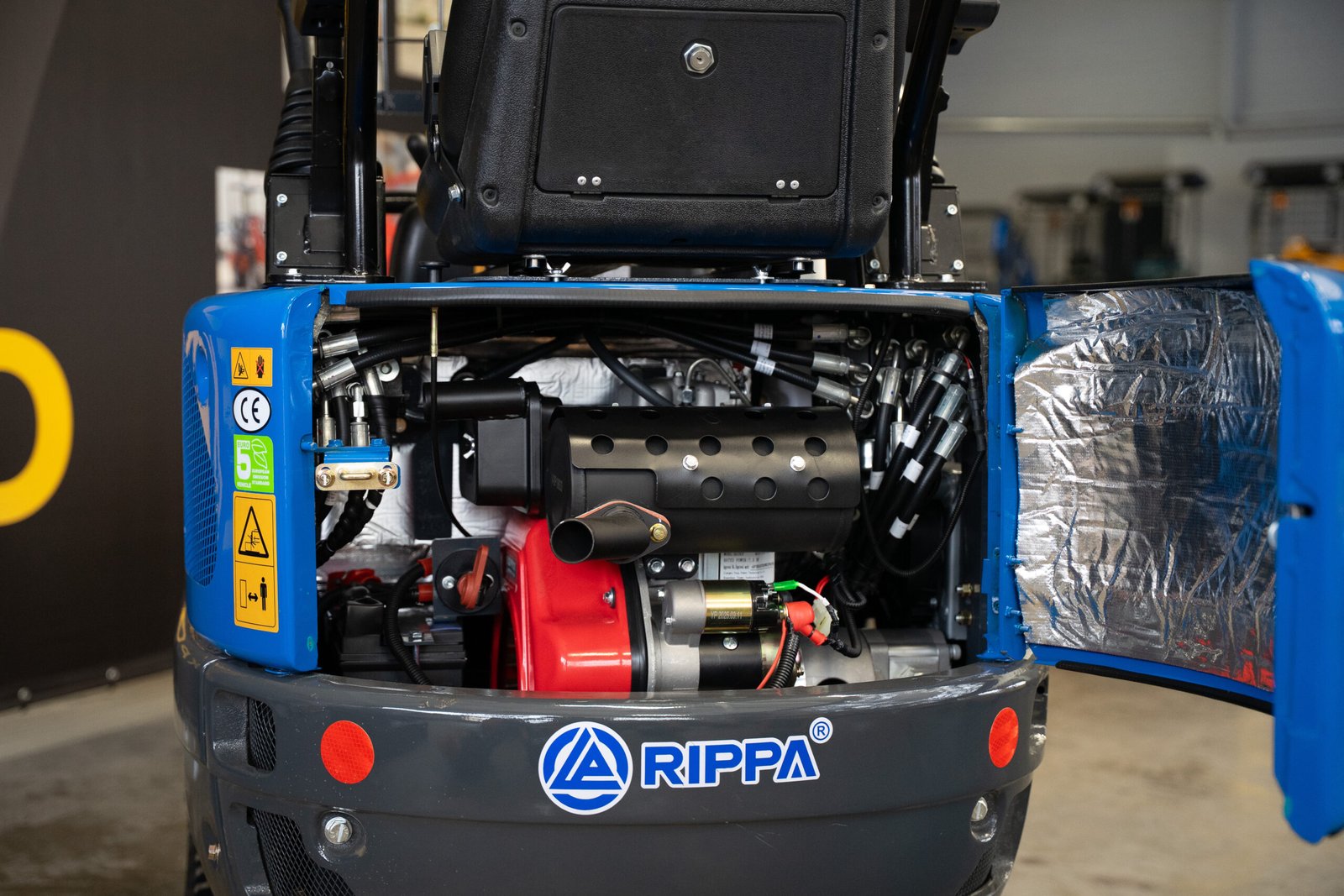
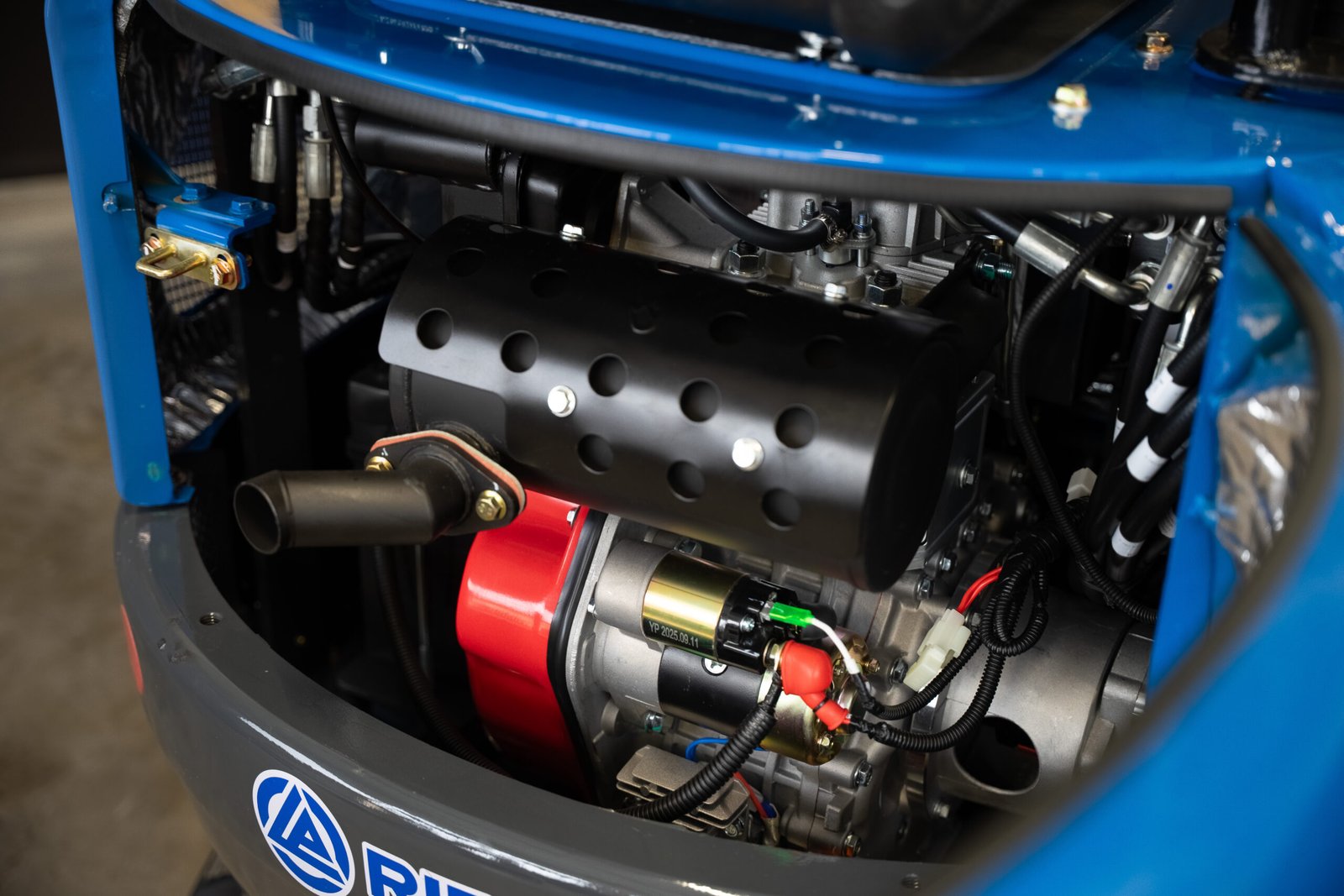
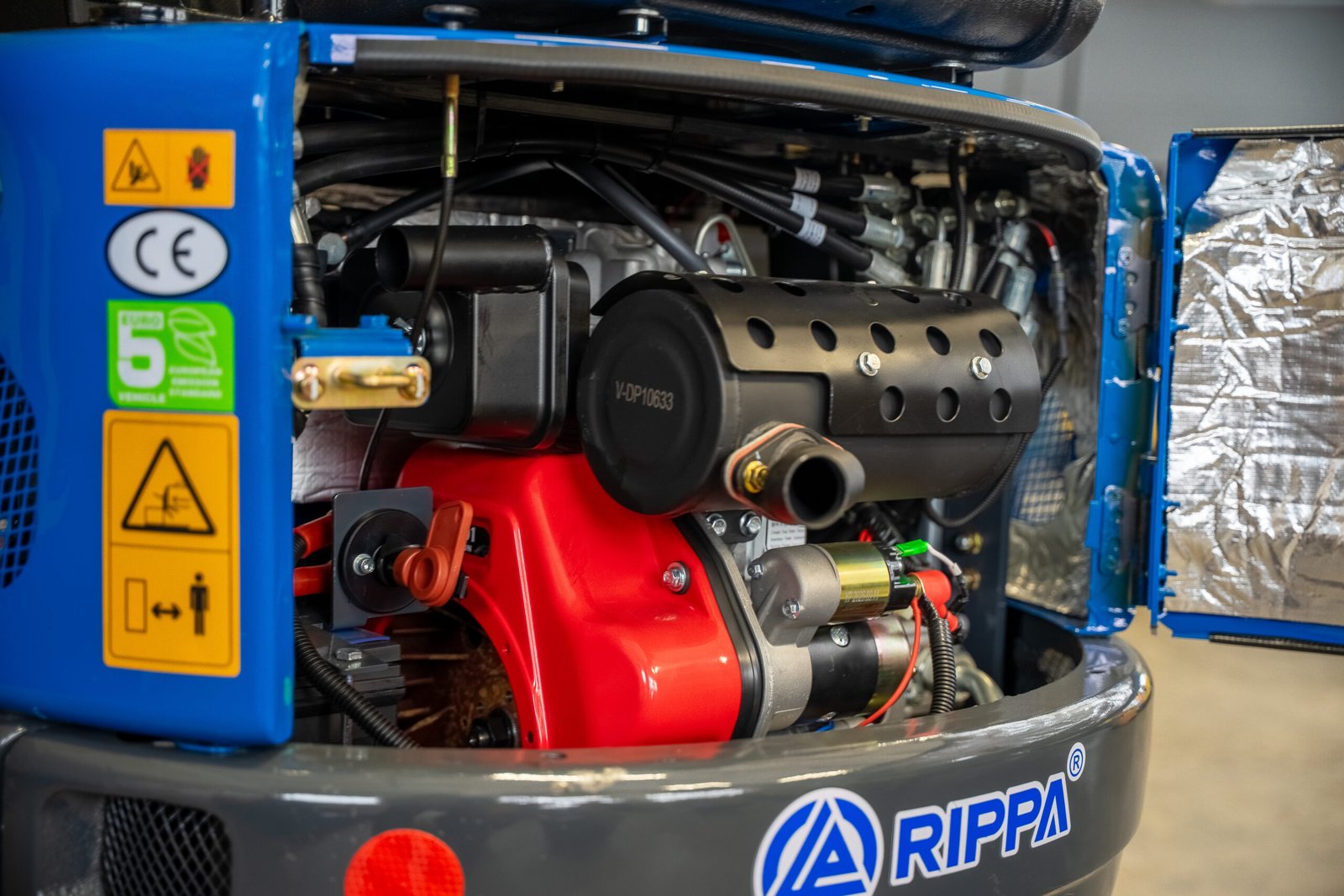
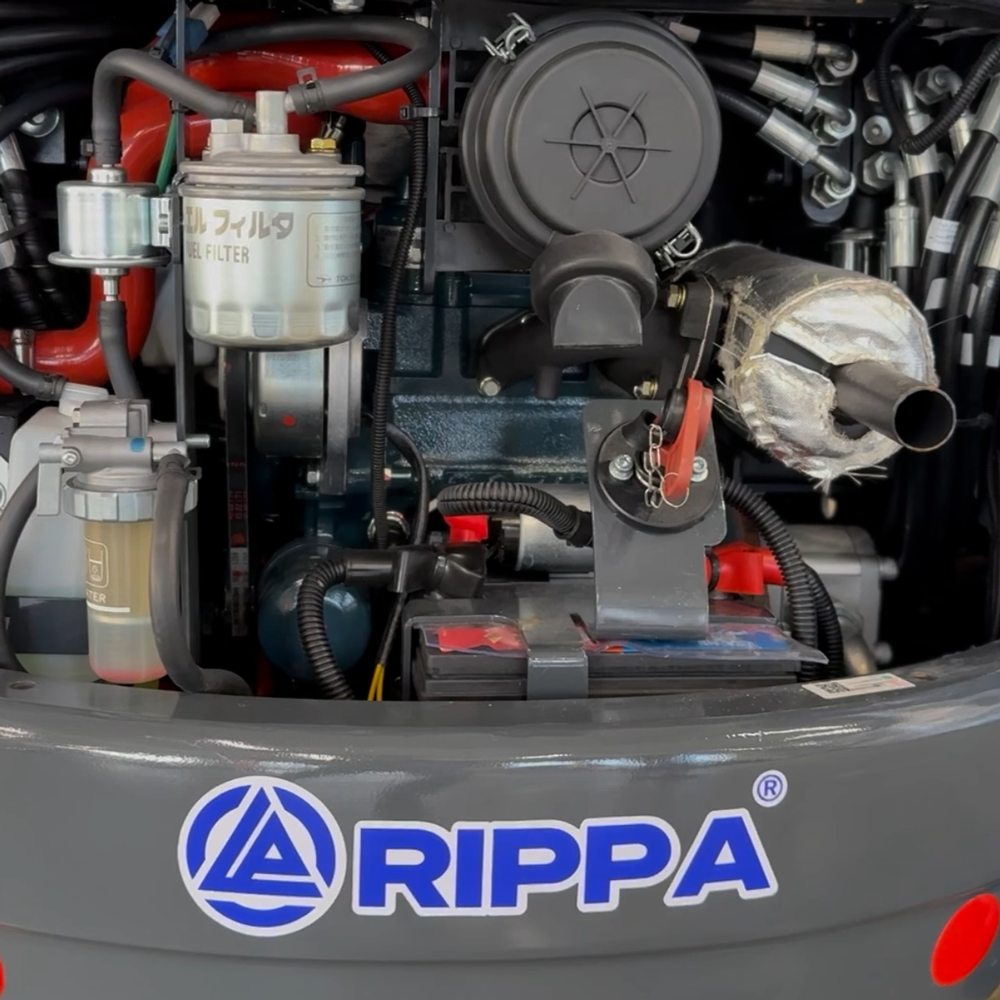
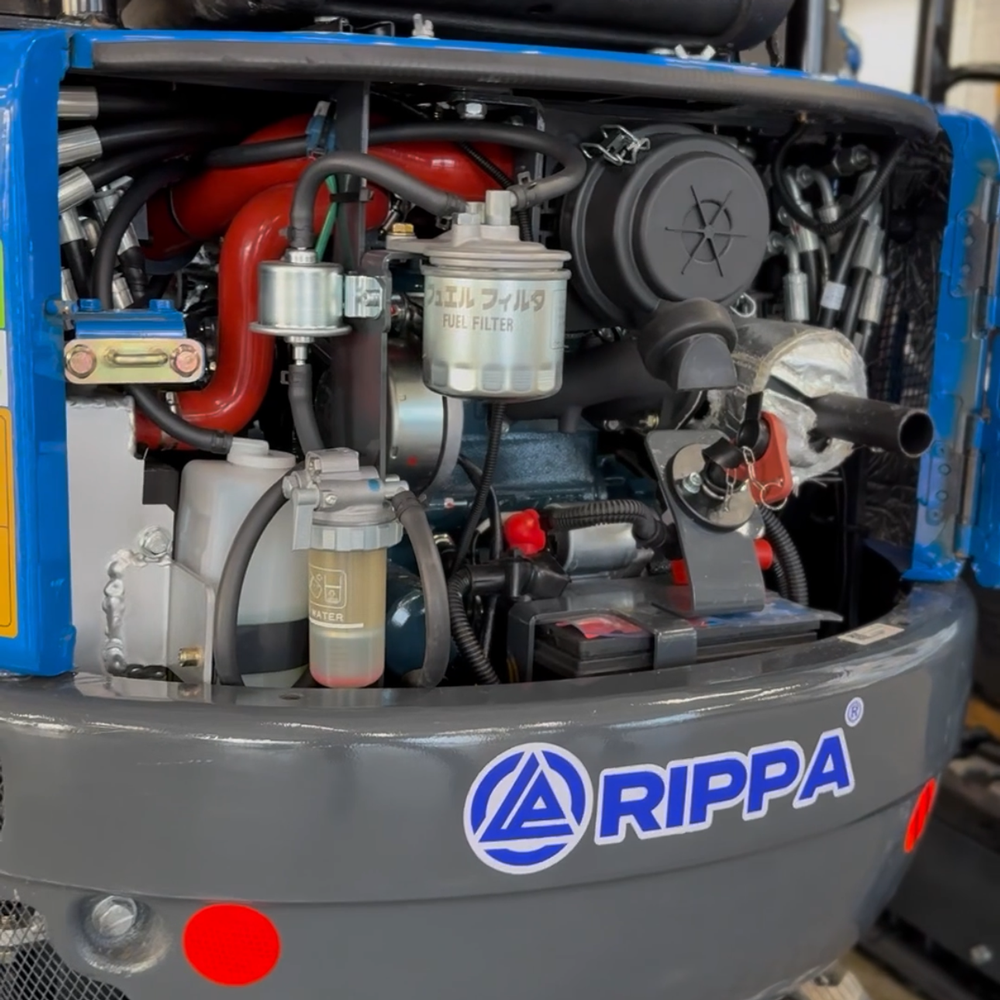
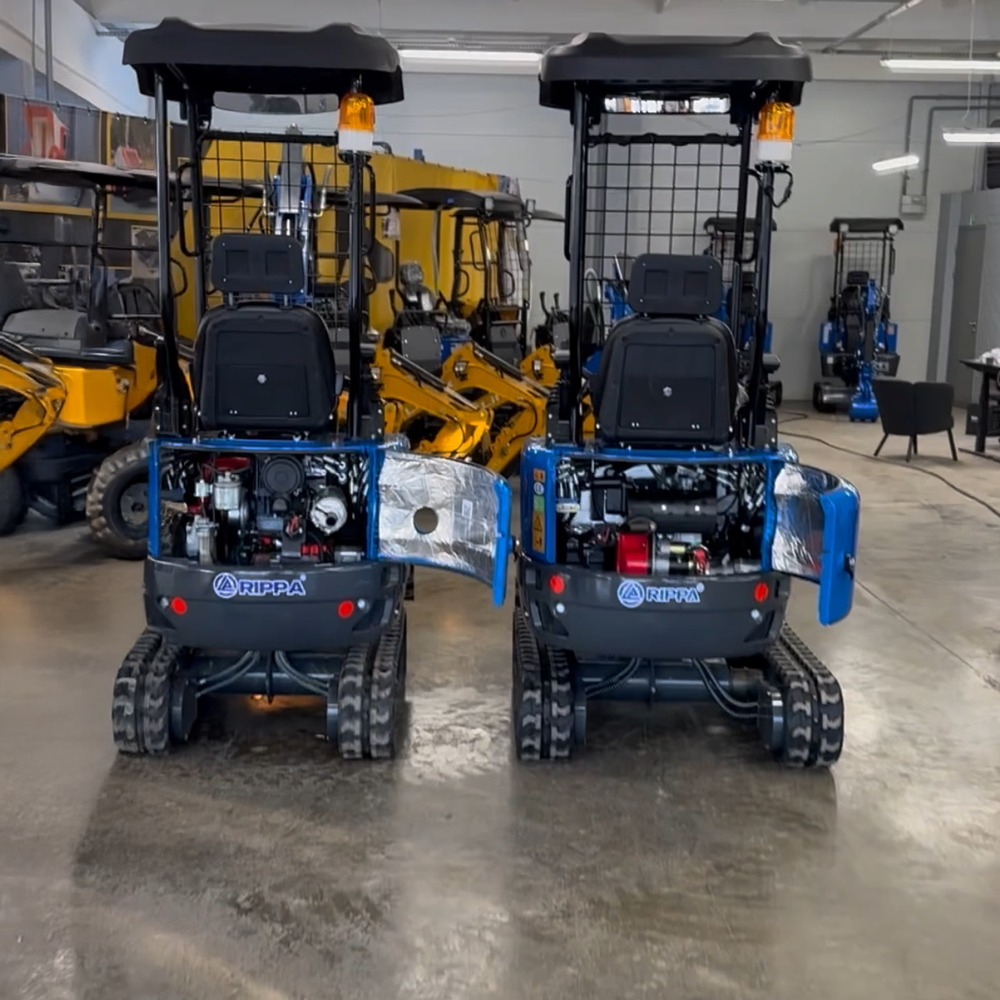
The price is similar; the engine is what differs. And it is the engine that decides how much the machine burns in a day and whether it keeps pulling when the bucket hits a rock.
In short: if you dig a lot, every day, get diesel. If the machine will sit more than it works, petrol is enough.
When choosing a mini excavator, almost everyone thinks about the engine. Few know what that difference really means on site. On the phone people usually ask the price, not how diesel differs from petrol. Yet the engine decides how much you leave at the fuel station each week and whether the machine stalls in hard ground.
The difference is simple. A petrol engine compresses an air-fuel mixture and ignites it with a spark, like a car. A diesel engine compresses the air so hard that the fuel ignites on its own. Diesel pulls more energy from the same fuel, so it burns less where you need to work non-stop.
When digging, what matters is not how much horsepower is on paper but when that power arrives. A petrol engine pulls hardest only at high revs. Diesel pushes from low down, straight away. When the bucket bites into clay or hits a rock, diesel does not give up — it keeps pulling. You feel that through the lever, not from a spec sheet.
That is why machines built to dig every day almost always run diesel. Petrol is left to lighter equipment that works in bursts.
This is the key point, and where most people slip. You look at the price at the pump, but what counts is how many litres the machine burns.
The RIPPA R10 with the Kubota Z482 engine burns 0.8–1.2 litres per hour (manufacturer data). Take the average, about one litre. Over an eight-hour day that is roughly eight litres. A petrol machine of the same class burns noticeably more under digging load, because it runs at high revs. Manufacturers do not publish exact petrol figures, and inventing one would be dishonest. But the principle is clear: the more hours per season you dig, the more that difference hits your pocket.
Consumption figures are from the manufacturer; the cost example is based on fuel prices in Lithuania and is for illustration only.
Petrol is not bad. There are jobs where it fits. Petrol works if you dig rarely, not daily. If the work is light and the ground is soft. If a lower upfront price and quieter operation matter more. If the machine will sit in the garage more than it works, petrol is plenty — and you save on the purchase.
Diesel pays off when the machine works rather than waits. If you dig every day, or nearly. If the ground is hard — clay, gravel, roots. If the days are long and the machine pulls under load for hours. The more hours you dig per season, the faster diesel pays back. And the moment work gets serious, you feel the difference straight away — both digging and at the pump. That is why those who dig a lot usually go straight for diesel.
We do not ask about price or engine first. We ask how much and what you dig. Only then is it clear whether the simpler option is enough or diesel is worth it.
We supply the RIPPA R10 as diesel, with a YOOP or Kubota Z482 engine. Because whoever digs a lot wants the machine to pull and not eat half the earnings in fuel.
If you do not know whether diesel or petrol, you have not yet worked out how much you will dig. Better to do that now, over a coffee, than to realise mid-season that the machine burns more than you planned.
Simple rule of thumb: if you will work more than a few days a month and dig more than just soft soil, get diesel. A few times a season for light jobs — petrol is enough.
Email us at sales@jekpo.com or call +370 628 87 761. Find out more at jekpo.com/en.